

The Williams Surname Meaning and Its Welsh Roots
The Williams surname stands as one of the most prevalent family names in English-speaking countries, with deep historical roots tracing back to medieval Wales. The meaning of Williams is straightforward yet significant: it derives from the personal name William, combined with the patronymic suffix ‘-s,’ which in Welsh naming conventions indicates ‘son of.’ Therefore, Williams literally translates to ‘son of William.’ This patronymic structure was common throughout Wales and eventually spread to England, particularly after the Norman Conquest brought the name William into widespread use among both nobility and common people. Understanding the Williams surname meaning provides valuable insight into how your ancestors were identified and how family lineages were tracked in medieval and early modern Britain.
The name William itself has Germanic origins, stemming from the elements ‘wil’ (desire or will) and ‘helm’ (helmet or protection). When combined, William means ‘resolute protector’ or ‘determined defender,’ qualities that were highly valued in medieval society. The evolution of Williams as a surname occurred gradually, particularly during the 13th and 14th centuries when hereditary surnames became increasingly necessary for administrative and taxation purposes. In Wales, the patronymic system was especially prevalent, and many Welsh families adopted surnames based on their father’s given name. The Williams surname meaning thus encapsulates both the personal characteristics associated with the name William and the family structure of medieval Welsh society, making it a fascinating window into your ancestral past.
Historical Origins of the Williams Family Name
The historical origins of the Williams surname are firmly rooted in Wales, where the patronymic naming system dominated for centuries. During the medieval period, Welsh families identified themselves through lineage rather than fixed surnames, using constructions like ‘Dafydd ap Llywelyn’ (David son of Llywelyn). As English administrative systems expanded into Wales following the Edwardian conquest in the late 13th century, the need for standardized surnames became pressing. The Williams surname emerged as English officials required consistent family identifiers for legal documents, tax records, and land ownership. This transition from patronymic identification to hereditary surnames happened gradually across Wales, with the Williams name becoming increasingly common among both Welsh nobility and peasantry. The surname’s prevalence in Welsh records from the 15th century onward demonstrates how thoroughly it had become established as a hereditary family name by that era.
Geographic distribution of the Williams surname during its formative centuries shows concentrated populations in South Wales, particularly in Carmarthenshire, Pembrokeshire, and Glamorgan. These regions had strong Welsh cultural traditions and maintained patronymic naming conventions longer than some areas. The surname’s expansion beyond Wales accelerated during the Tudor period, when Welsh families gained increased prominence in English affairs following Henry VII’s ascension to the throne in 1485. Henry VII himself was of Welsh descent, which elevated the status of Welsh families and encouraged their migration to England. By the 16th and 17th centuries, Williams had become established throughout England, Scotland, and eventually Ireland. The name’s journey from a purely Welsh patronymic to an international surname reflects broader historical patterns of cultural integration and administrative standardization across the British Isles.

Williams Surname Distribution and Geographic Significance
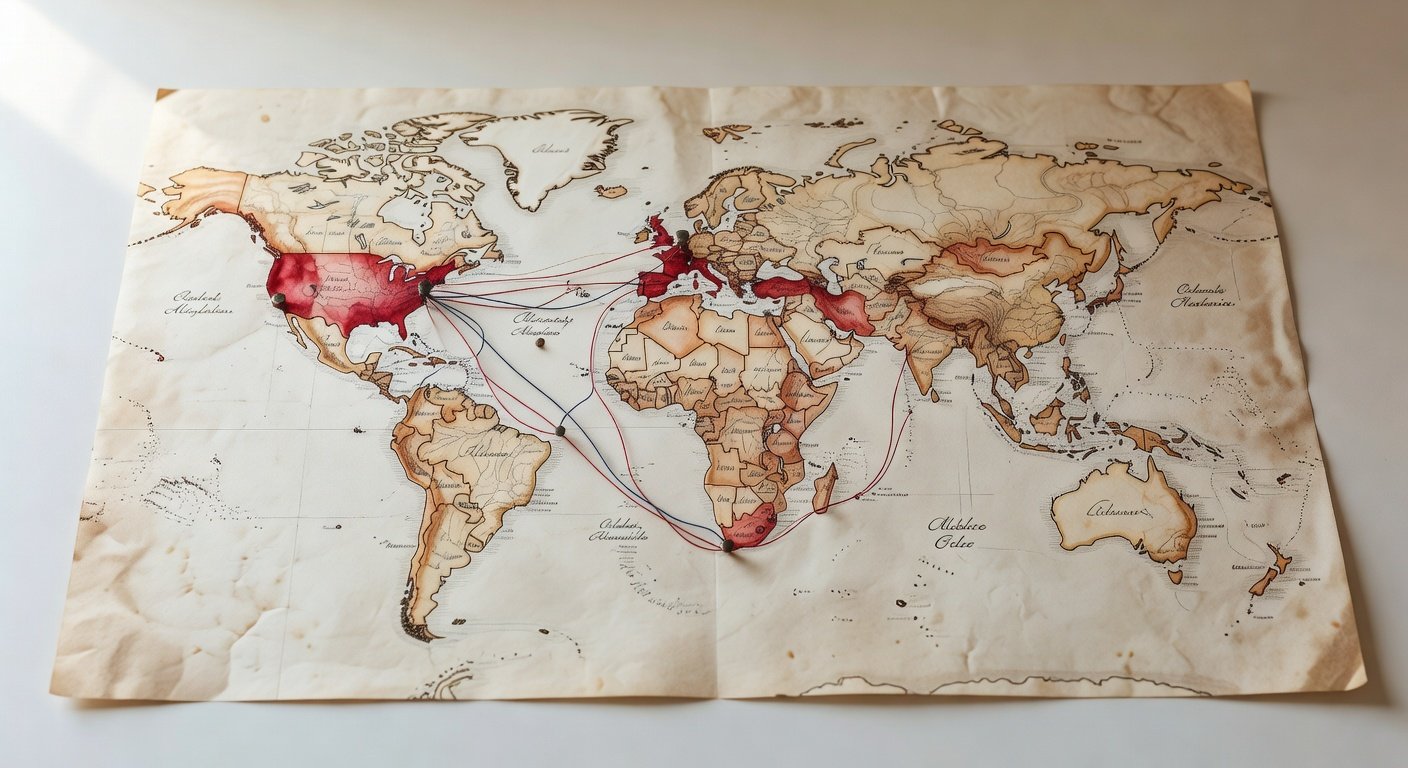
The geographic distribution of the Williams surname reveals fascinating patterns about migration, settlement, and cultural influence across centuries. Today, Williams ranks among the most common surnames in the United States, United Kingdom, Canada, Australia, and New Zealand—predominantly in regions with significant British and Welsh immigration. In Wales itself, Williams remains extraordinarily common, with particularly high concentrations in South Wales industrial valleys where 19th-century coal mining attracted massive populations. The surname’s prevalence in these areas reflects both the original Welsh heartland and subsequent internal migration during industrialization. In the United States, Williams distribution follows settlement patterns of Welsh and English immigrants, with notable concentrations in Appalachia, where Welsh settlers established communities in the 18th and 19th centuries. Understanding the geographic distribution of Williams helps genealogists narrow research parameters and identify ancestral origins with greater precision.
The expansion of Williams across the Atlantic and to colonial territories occurred primarily during the 17th through 19th centuries, coinciding with British imperial expansion and mass emigration. Welsh families, like many British populations, sought economic opportunities in colonial America, and the Williams surname appears prominently in early colonial records from Virginia, Pennsylvania, and New England. The Industrial Revolution further accelerated migration patterns, as people from rural Wales moved to industrial centers in England and Wales, and subsequently emigrated to America and other English-speaking nations. Modern surname distribution maps show Williams concentrated most heavily in areas of British settlement, with particular density in Wales, England, and the American South. This geographic pattern provides genealogical researchers with valuable clues about ancestral origins and migration routes, making Williams surname distribution studies essential for family history research.
Notable Bearers of the Williams Surname
Throughout history, numerous individuals bearing the Williams surname have achieved prominence in diverse fields, contributing significantly to culture, science, politics, and the arts. In Welsh history, Williams family members held important positions as landowners, clergy, and administrators, particularly during the medieval and early modern periods. Sir William Williams of Cochwillan, a notable 16th-century Welsh gentleman, exemplified the prominence of the Williams family in Welsh affairs. During the American colonial period and early republic, Williams family members played crucial roles in political development, including signers of important documents and founders of institutions. The surname appears repeatedly in records of American Revolutionary figures, suggesting the Williams family’s deep involvement in the founding of the United States. These historical figures demonstrate how the Williams surname became associated with leadership, achievement, and social prominence across multiple centuries and continents.
In modern times, the Williams surname has been borne by influential figures in entertainment, sports, literature, and science. Prominent Williams individuals have achieved recognition as actors, musicians, athletes, and academics, contributing to the surname’s contemporary visibility and prestige. The prevalence of Williams among notable historical figures reflects both the surname’s numerical commonality and the opportunities available to families with this name across English-speaking societies. Examining the accomplishments of notable Williams bearers provides genealogical researchers with context for understanding their own family’s place within broader historical narratives. Many people researching their Williams ancestry discover connections to individuals of historical significance, adding depth and meaning to their family history research. These connections often motivate deeper investigation into family origins and ancestral achievements.
Williams Family History Research Methods
Researching Williams family history requires systematic approaches to navigate the surname’s prevalence and ensure accurate ancestral identification. Because Williams is so common, researchers must employ additional identifying information such as given names, geographic locations, occupations, and dates to distinguish between different family lines. Beginning with available family records—birth certificates, marriage licenses, wills, and photographs—provides a foundation for research. These documents often contain crucial details about parents, siblings, and locations that help establish family connections. Church records, particularly baptism, marriage, and burial registers, offer valuable information for earlier generations, especially in Wales where parish records date back centuries. Census records prove invaluable for Williams research, as they show family members living together and provide occupational information that aids in distinguishing between different Williams families in the same geographic area.
DNA Testing and Williams Surname Research
DNA testing has revolutionized Williams surname research by providing scientific confirmation of family connections and revealing unexpected ancestral origins. Autosomal DNA tests from services like Ancestry, MyHeritage, and FamilyTreeDNA connect individuals with genetic relatives, helping researchers verify family trees and discover previously unknown connections. Y-DNA testing specifically traces paternal lineages, making it particularly useful for Williams surname research since the name itself indicates patrilineal descent. Matching DNA results with other Williams researchers can confirm that you share a common ancestor and help establish the timeframe when your family lines diverged. Mitochondrial DNA testing traces maternal ancestry, providing a complete picture of family origins. The combination of traditional genealogical research with DNA evidence creates a comprehensive understanding of Williams family history and helps researchers overcome the challenges posed by the surname’s commonality.
Williams Surname Variants and Spelling Variations
The Williams surname has numerous variants and spelling variations that reflect historical record-keeping practices, regional differences, and phonetic transcription by clerks unfamiliar with Welsh naming conventions. Common variants include Willams, Wiliams, and Wyllams, reflecting inconsistent spelling standards in historical documents. In Welsh records, you may encounter the name written as ‘ap William’ or ‘ab William,’ using the Welsh patronymic prefixes meaning ‘son of.’ These variants are particularly common in documents predating standardized spelling conventions, which didn’t become established until the 19th century. Understanding these variations is essential for comprehensive genealogical research, as your ancestor’s name might appear spelled multiple ways within the same document set. Some researchers encounter variants like Williamson, which combines the English patronymic suffix ‘-son’ with William, creating a hybrid form that appears in border regions and areas of mixed English-Welsh influence.
Regional and occupational variants also exist, with some Williams families adopting additional descriptors to distinguish themselves from others with the same surname. Names like Williams the Miller or Williams the Younger appear in medieval records, indicating occupations or distinguishing between family members. In some cases, Williams families anglicized their names further, adopting forms like Williamson or even completely different surnames through marriage or administrative error. Irish records sometimes show variants reflecting Gaelic phonetic interpretations of the English surname. Understanding these variants prevents researchers from missing important ancestral connections and helps explain apparent gaps in family records. When conducting genealogical research, searching for multiple spelling variations of Williams in historical databases and records significantly increases the likelihood of finding relevant ancestral information.
What Your Williams Surname Reveals About Your Ancestry
Bearing the Williams surname provides specific clues about your family’s ancestral origins and historical context. If your Williams ancestors originated in Wales, your family heritage connects directly to medieval Welsh society and the development of hereditary surname systems. The prevalence of Williams in Welsh records indicates your family was established in Wales by at least the 15th century, and likely much earlier. If your Williams ancestors emigrated from Wales to England, America, or other English-speaking nations, your family participated in the broader patterns of British migration and imperial expansion. The surname’s presence in colonial American records suggests your ancestors were among the early settlers who helped establish English-speaking communities in North America. Understanding what your Williams surname reveals about your ancestry helps contextualize your family history within larger historical movements and provides motivation for deeper genealogical research.
The Williams surname also suggests certain characteristics about your family’s social position and occupations throughout history. While the name appears across all social classes, Williams family members frequently held positions as landowners, clergy, merchants, and craftspeople. In industrial-era Wales, many Williams family members worked in coal mining, ironworks, and textile manufacturing. In America, Williams ancestors pursued diverse occupations reflecting available opportunities in their settlement regions. The surname’s association with Welsh heritage may indicate cultural traditions, religious affiliations, or language heritage within your family. Many Williams families maintained Welsh cultural identity even after emigrating, preserving language, customs, and religious practices. Exploring what your Williams surname reveals about your ancestry enriches your understanding of your family’s place in history and connects you to broader narratives of cultural preservation and adaptation across generations.
Frequently Asked Questions
What does the Williams surname mean?
Williams means ‘son of William,’ derived from the Welsh patronymic naming system. The suffix ‘-s’ indicates descent from a father named William. The name William itself comes from Germanic roots meaning ‘resolute protector’ or ‘determined defender,’ combining elements for will and helmet or protection.
Where does the Williams surname originate from?
The Williams surname originates from Wales, where it developed from the medieval patronymic naming convention. As hereditary surnames became necessary for administrative purposes in the 13th-14th centuries, the patronymic ‘ap William’ evolved into the fixed surname Williams. The name became particularly common in South Wales regions like Carmarthenshire and Pembrokeshire.
How common is the Williams surname?
Williams is one of the most common surnames in English-speaking countries, ranking among the top surnames in the United States, United Kingdom, Wales, Canada, and Australia. Its prevalence reflects both its Welsh origins and widespread British emigration patterns. The surname’s commonality makes genealogical research challenging, requiring additional identifying information like locations and dates.
What are common Williams surname variants?
Common variants include Willams, Wiliams, Wyllams, and Williamson. Welsh records may show ‘ap William’ or ‘ab William’ using patronymic prefixes. Regional variants and occupational descriptors like ‘Williams the Miller’ also appear in historical documents. These variations reflect inconsistent spelling standards before the 19th century.
How can I research my Williams family history?
Start with family documents like birth certificates and wills, then consult church records and census data. Because Williams is common, use additional identifiers like given names, locations, and occupations to distinguish family lines. DNA testing through services like Ancestry or MyHeritage can confirm family connections and reveal ancestral origins scientifically.
Ready to Uncover Your Williams Family History?
Now that you understand what the Williams surname reveals about your ancestry, you’re prepared to begin or deepen your genealogical research. Start by gathering family documents and exploring free genealogy websites like FamilySearch.org. Consider DNA testing through services like Ancestry or MyHeritage to confirm family connections and discover previously unknown relatives. Visit our guides on free genealogy websites and cemetery research to learn additional research methods. Whether you’re just beginning your family history journey or continuing established research, the Williams surname’s rich Welsh heritage offers fascinating discoveries waiting to be uncovered about your family’s past.