

Understanding Tombstone Date Calculator Tools
A tombstone date calculator serves as an essential tool for genealogists, historians, and family researchers who need to determine precise birth and death dates from cemetery inscriptions. These specialized calculators interpret various date formats found on headstones, including abbreviated months, Roman numerals, and age-at-death inscriptions that require mathematical conversion. Many historical graves display only partial information, such as ‘Aged 47 years, 3 months, 2 days’ alongside a death date, requiring calculation to determine the birth date. Modern tombstone calculator tools streamline this process by automatically computing missing dates based on available information.
The complexity of cemetery date interpretation extends beyond simple arithmetic. Historical headstones often use different calendar systems, abbreviated formats, or weathered inscriptions that make direct reading challenging. A headstone date calculator addresses these complications by accommodating various input formats and providing accurate conversions. Professional genealogists rely on these tools to verify family records, resolve discrepancies in historical documents, and build comprehensive family trees. The precision offered by grave date calculator tools becomes particularly valuable when cross-referencing multiple sources or when cemetery records serve as primary documentation for vital statistics.
Types of Date Information Found on Tombstones
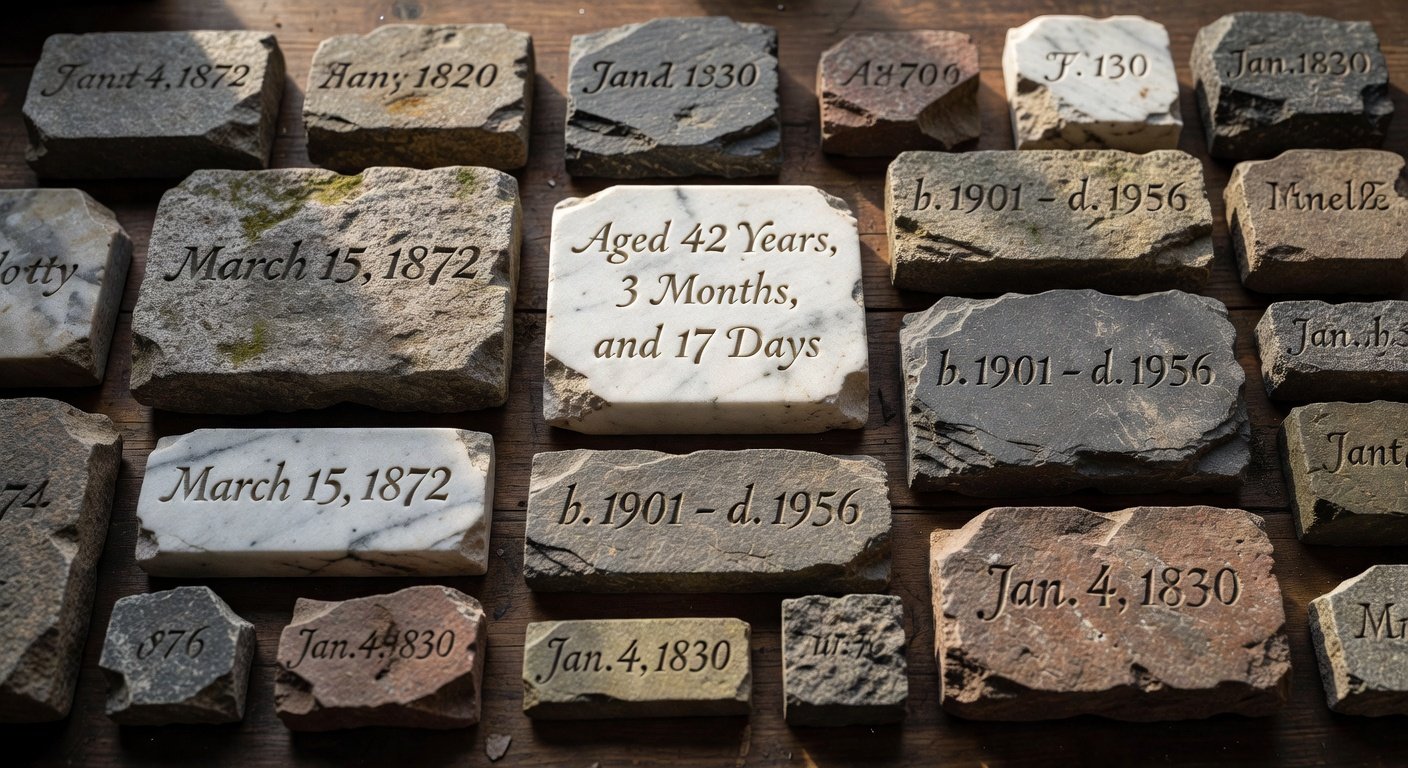
Cemetery monuments display date information in numerous formats, each requiring different calculation approaches. Complete birth and death dates appear as standard month-day-year inscriptions, while abbreviated versions might show only years or use shortened month names. Age-at-death inscriptions present the most calculation-intensive format, typically reading ‘Aged X years, Y months, Z days’ or similar variations. Some tombstones include additional temporal markers such as ‘In the 67th year of his age’ or ‘Died in her 23rd year,’ which require interpretation of historical age-counting conventions. European-style dates with day-month-year ordering add another layer of complexity for American researchers.
How to Use a Tombstone Birthday Calculator
Operating a tombstone birthday calculator requires systematic data entry and understanding of the tool’s calculation methods. Begin by recording all visible date information from the headstone, including death dates, age-at-death inscriptions, and any partial birth date information. Input the known death date using the calculator’s specified format, typically month-day-year or day-month-year depending on the tool’s design. Enter age information precisely as inscribed, including years, months, and days when available. The calculator then performs backward calculation from the death date, subtracting the specified age to determine the birth date.
Advanced tombstone calculator features accommodate complex scenarios such as leap year adjustments, calendar system conversions, and historical dating conventions. Some tools include options for Julian-to-Gregorian calendar transitions, which affected dates before 1752 in British territories. When working with incomplete information, enter available data and use the calculator’s estimation features to generate probable date ranges. Cross-reference calculated results with other family records, census data, or historical documents to verify accuracy. Document your calculation process and sources for future reference, as these computations often become crucial evidence in genealogical research.
Common Calculation Challenges and Solutions
Cemetery date calculations present several recurring challenges that require specialized approaches. Weathered inscriptions may obscure crucial digits, necessitating educated guesses based on family history context and historical probability. Age-at-death calculations become complex when tombstones use non-standard phrasing such as ‘In his 45th year’ versus ‘Aged 45 years,’ which can differ by up to one year depending on interpretation. Some headstones display conflicting information, such as birth years that don’t align with calculated ages, requiring researchers to evaluate which data source appears more reliable. International date formats and non-English inscriptions add linguistic and cultural interpretation requirements to the calculation process.
Manual Calculation Methods for Grave Date Calculator Tasks
When digital tools aren’t available, manual calculation methods provide reliable alternatives for determining birth and death dates from tombstone information. Start with the known death date and work backward using the age-at-death inscription. Subtract the years first, then months, then days, accounting for calendar irregularities such as varying month lengths and leap years. For example, if someone died on March 15, 1923, aged 67 years, 8 months, and 12 days, subtract 67 years to reach 1856, then 8 months to reach July 1855, then 12 days to arrive at July 3, 1855, as the calculated birth date. Verify calculations by working forward from the calculated birth date to confirm it produces the correct age at death.
Complex manual calculations require careful attention to historical calendar systems and cultural dating practices. Before 1752, British colonies used the Julian calendar with March 25 as New Year’s Day, affecting date calculations for that period. Some ethnic communities maintained traditional calendar systems alongside civil dates, potentially creating discrepancies in tombstone inscriptions. When calculating across century boundaries, account for leap year patterns and calendar reforms that affected specific time periods. Create calculation worksheets that show each step of your process, enabling verification and correction of errors. Practice with known examples before attempting calculations on critical genealogical evidence.
Verification Techniques for Calculated Dates
Accurate date calculation requires systematic verification against multiple sources and logical consistency checks. Compare calculated birth dates with census records, which typically provide age information that should align with tombstone calculations within reasonable margins. Examine family group patterns, as siblings’ birth dates should follow logical sequences and parents’ ages at childbirth should fall within biologically reasonable ranges. Cross-reference calculated dates with historical events, military service records, marriage dates, and other documented life events to identify potential inconsistencies. When discrepancies arise, prioritize sources based on their proximity to the events in question and their likelihood of accuracy.
Advanced Features in Modern Headstone Date Calculator Tools
Contemporary headstone date calculator applications incorporate sophisticated features that address complex genealogical research scenarios. Multi-calendar support enables calculations across different dating systems, including Julian, Gregorian, Hebrew, and other cultural calendars used in various immigrant communities. Batch processing capabilities allow researchers to calculate multiple family member dates simultaneously, streamlining large-scale cemetery documentation projects. Some advanced tools include probability algorithms that suggest likely date ranges when working with incomplete or partially legible inscriptions. Integration with genealogical databases enables automatic cross-referencing of calculated dates with existing family tree information.
Professional-grade grave date calculator tools offer export functions that generate formatted reports suitable for genealogical software import or research documentation. Error-checking algorithms identify potentially problematic calculations, such as birth dates that would result in unrealistic lifespans or ages at major life events. Some applications include photographic integration, allowing researchers to attach tombstone images directly to calculation records for future reference. Advanced search functions enable filtering and sorting of calculated dates by various criteria, facilitating pattern recognition and family group analysis. Regular updates to these tools incorporate new historical calendar data and improved calculation algorithms based on user feedback and scholarly research.
Best Practices for Tombstone Calculator Research
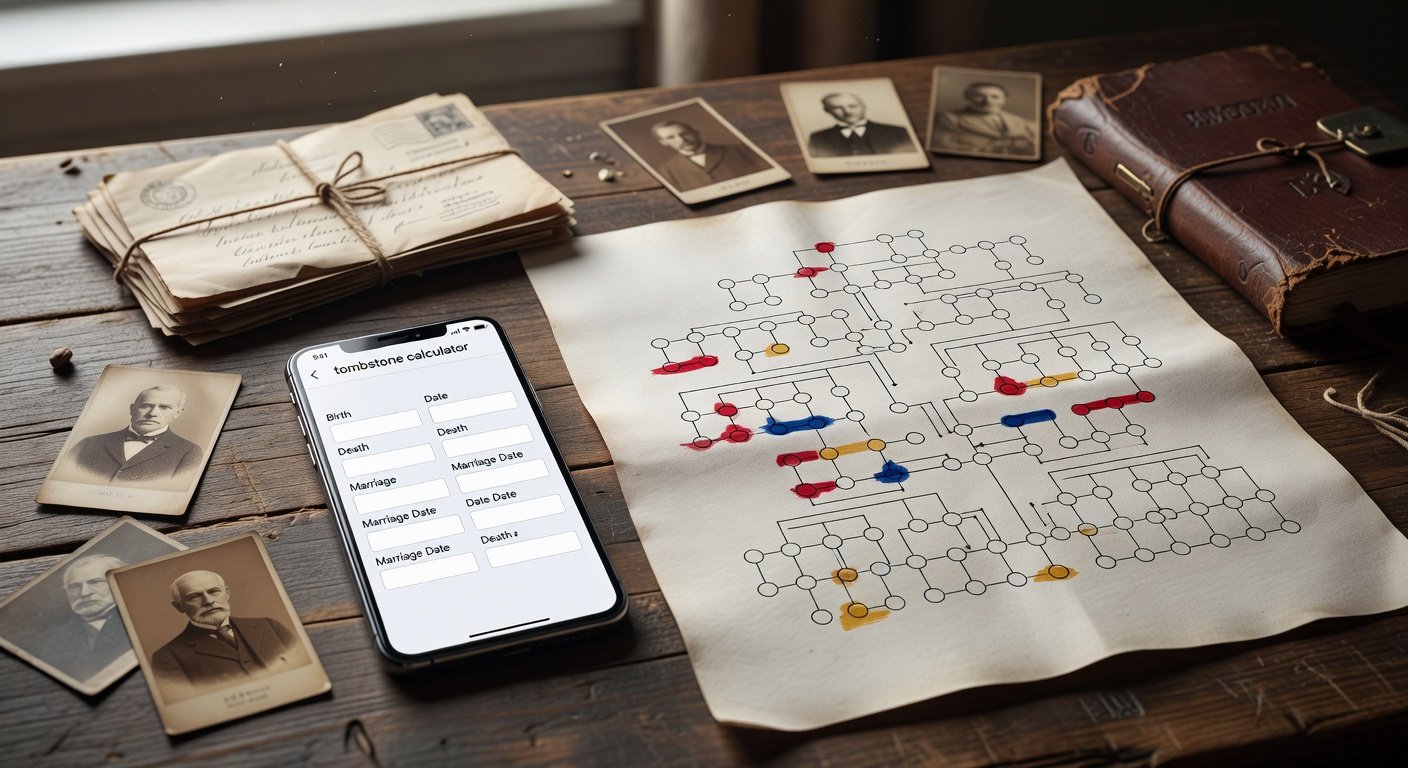
Effective tombstone calculator usage requires adherence to established genealogical research standards and documentation practices. Photograph all relevant tombstone surfaces before beginning calculations, capturing inscriptions from multiple angles and lighting conditions to ensure complete data recovery. Record environmental factors that might affect inscription visibility, such as weather conditions, time of day, and seasonal vegetation coverage. Maintain detailed calculation logs that document input data, calculation methods, results, and verification sources for each computed date. When possible, involve multiple researchers in the calculation process to minimize individual errors and provide independent verification of results.
Frequently Asked Questions
How do you calculate age from a tombstone?
To calculate age from a tombstone, subtract the birth date from the death date. If only age-at-death is inscribed, work backward from the death date by subtracting the stated years, months, and days. Account for leap years and varying month lengths in your calculations.
What does the date on a tombstone mean?
Tombstone dates typically indicate birth and death dates, though formats vary. Some show complete dates, others display only years, and many include age-at-death inscriptions. Historical tombstones may use different calendar systems or abbreviated formats requiring interpretation.
How do you read old headstone dates?
Old headstone dates often use abbreviated months, Roman numerals, or age-at-death formats. Look for patterns like ‘Aged X years, Y months, Z days’ and calculate backward from known death dates. Consider historical calendar changes and regional dating conventions when interpreting older inscriptions.
Are tombstone date calculators accurate?
Tombstone date calculators provide accurate results when used correctly with complete data. However, accuracy depends on inscription legibility, correct data entry, and appropriate calendar system selection. Always verify calculated dates against other historical records when possible.
What information do I need for a tombstone date calculator?
Most tombstone date calculators require either a complete birth/death date pair or a death date combined with age-at-death information. Some tools accept partial dates or age ranges. Clear photographs of inscriptions help ensure accurate data entry and calculation results.
Ready to Calculate Your Family’s Tombstone Dates?
Start your genealogical research journey with accurate date calculations from cemetery records. Our comprehensive guides and tools help you interpret historical inscriptions and build complete family timelines. Contact our genealogy experts for personalized assistance with complex tombstone date calculations and family history research.