
The Fascinating World of Surnames Beginning With F
Surnames beginning with F represent a rich tapestry of linguistic heritage spanning centuries of human migration, occupation, and cultural evolution. From the ancient Anglo-Saxon traditions to modern immigration patterns, these family names carry stories of ancestors who shaped their identities through their trades, locations, and personal characteristics. The letter F introduces us to surnames that reflect medieval occupations like Fisher and Fletcher, geographical features such as Ford and Forest, and patronymic traditions found in names like Fitzgerald and Ferguson. Each surname starting with F offers genealogists and family history enthusiasts a window into the social structures, economic activities, and cultural practices of bygone eras.
Understanding the etymology of surnames starting with F provides valuable insights for anyone researching their family tree or exploring genealogical connections. These last names beginning with F often reveal migration patterns, with many originating in England, Scotland, Ireland, and various European regions before spreading globally through colonization and immigration. The prevalence of certain F surnames in specific geographical areas can help researchers narrow down potential ancestral locations and understand how families moved across continents. Whether your surname is common like Foster or more unique like Fairweather, each name carries distinctive historical significance that connects modern families to their ancestral roots.
Occupational Surnames Starting With F
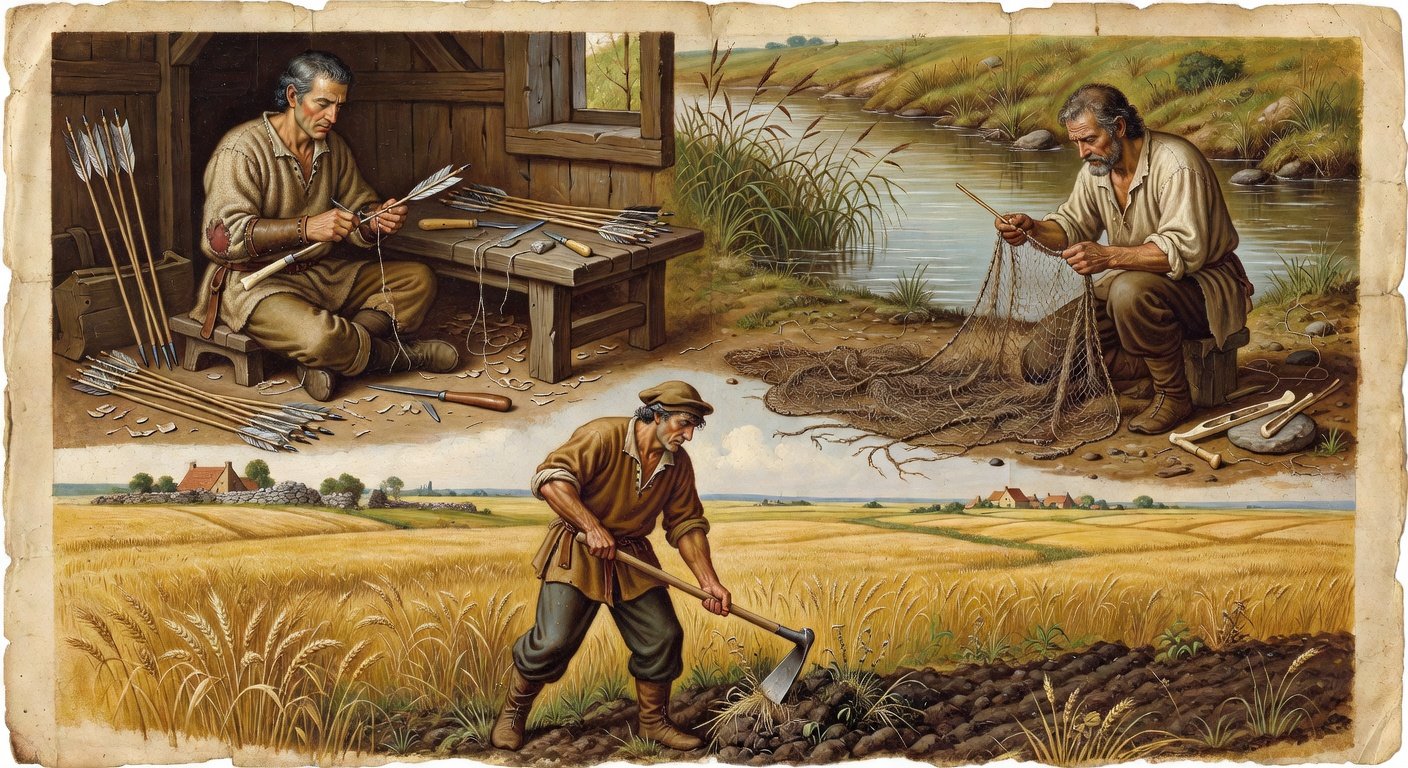
Occupational surnames beginning with F dominated medieval society, reflecting the essential trades and crafts that sustained communities across Europe. Fisher, one of the most widespread surnames starting with F, originated from families whose livelihood depended on catching and selling fish, particularly in coastal regions and river communities. Fletcher emerged from the crucial profession of arrow-making, derived from the Old French ‘flechier,’ indicating the vital role these craftsmen played in medieval warfare and hunting. Farmer, another prominent occupational surname, identified families who cultivated land and raised livestock, distinguishing them from laborers who worked others’ fields. These occupational last names beginning with F often concentrated in regions where specific trades flourished, creating geographical clusters that genealogists can trace today.
The surname Fuller represents one of the most important textile occupations in medieval England, referring to workers who cleaned and thickened woolen cloth through a process called fulling. Forester indicated families responsible for managing woodland areas, protecting game, and overseeing timber resources for nobility or religious institutions. Fowler identified professional bird catchers who supplied meat and feathers to medieval markets, while Franklin designated free landowners who held property without feudal obligations. These occupational surnames starting with F reveal the complex economic structures of medieval society and provide genealogical researchers with valuable clues about their ancestors’ social status, geographical locations, and potential connections to specific industries or trades.
Craft and Trade Surnames Beginning With F
Specialized craft surnames starting with F illuminate the sophisticated skill sets required in medieval and early modern economies. Farrier emerged from the essential profession of horseshoeing and equine care, combining veterinary knowledge with metalworking expertise that made these craftsmen invaluable in agricultural and military contexts. Faulkner, derived from falconry, identified families who trained hunting birds for nobility, representing a prestigious occupation that required extensive knowledge of avian behavior and hunting techniques. Feltmaker indicated artisans who produced felt materials for hats, boots, and other essential items, while Furrier designated professionals who prepared and sold animal pelts for clothing and trade. These specialized surnames beginning with F often indicate ancestors with higher social status and economic stability.
Geographical and Topographical F Surnames
Geographical surnames starting with F frequently derive from landscape features, settlements, or regional characteristics that defined ancestral homelands. Ford represents one of the most common topographical surnames beginning with F, indicating families who lived near river crossings or shallow water passages that facilitated transportation and trade. Field and Fields identify ancestors who resided near open agricultural areas or meadowlands, while Forest and Forrest point to families associated with wooded regions. Fountain suggests proximity to natural springs or constructed water sources, often indicating settlements in areas with reliable water supplies. These geographical last names starting with F provide genealogists with specific environmental clues about ancestral locations and can help narrow research to particular regions or landscape types.
Hill variations like Fairhill and Fernhill combine topographical elements with descriptive adjectives, creating surnames that paint vivid pictures of ancestral landscapes. Ferry indicates families associated with water transportation services, often living near river crossings or coastal areas where ferry operations connected communities. Fell, common in Northern England and Scotland, refers to highland or mountainous terrain, suggesting ancestors from rugged, elevated regions. These geographical surnames beginning with F often correlate with specific dialect regions and can help researchers identify potential areas of origin. The distribution patterns of these names across modern populations frequently mirror historical migration routes and settlement patterns, making them valuable tools for genealogical investigation.
Settlement and Location-Based F Surnames
Settlement-derived surnames starting with F often reference specific towns, villages, or regional characteristics that distinguished ancestral communities. Fairfax originated from a place name meaning ‘fair hair’ or ‘beautiful hair,’ likely referring to a geographical feature or local characteristic. Flemming and Fleming indicate ancestral connections to Flanders, reflecting medieval migration patterns from the Low Countries to England and Scotland. French identifies families with French origins or connections, often indicating Norman ancestry or later French immigration. These location-based surnames beginning with F serve as genealogical breadcrumbs, pointing researchers toward specific regions, migration periods, and cultural connections that shaped family histories across generations.
Patronymic and Family-Based Surnames Starting With F
Patronymic surnames beginning with F reveal family relationships and naming traditions that connected generations through linguistic markers. Fitzgerald, meaning ‘son of Gerald,’ represents Irish patronymic traditions that identified family lineages through paternal connections. Ferguson, meaning ‘son of Fergus,’ demonstrates Scottish Gaelic naming patterns that preserved clan identities and family relationships. These patronymic last names starting with F often indicate Celtic origins and can help genealogists trace family lines through specific cultural and linguistic traditions. The ‘Fitz’ prefix, derived from Norman French, typically indicates noble or upper-class ancestry, while ‘son’ suffixes reflect Anglo-Saxon and Scandinavian naming conventions.
Personal characteristic surnames beginning with F often described ancestral physical features, personality traits, or social behaviors that distinguished individuals within communities. Fair and Fairchild indicated light complexion or hair color, while Strong and Swift described physical capabilities or personality characteristics. These descriptive surnames starting with F provide insights into how medieval communities identified and remembered individuals before formal surname systems became standardized. Understanding these naming patterns helps genealogists appreciate the social contexts in which surnames developed and can provide clues about ancestral appearances, behaviors, or community roles that influenced family identity formation.
Notable Families and Historical Significance of F Surnames
Throughout history, families with surnames beginning with F have played significant roles in politics, business, arts, and social movements across multiple continents. The Franklin surname gained international recognition through Benjamin Franklin, whose contributions to American independence, scientific discovery, and diplomatic relations exemplify the potential impact of individuals bearing surnames starting with F. The Ford family name became synonymous with industrial innovation through Henry Ford’s revolutionary automobile manufacturing techniques that transformed global transportation and labor practices. These prominent examples demonstrate how surnames beginning with F have been associated with leadership, innovation, and cultural influence throughout modern history.
Contemporary notable families with last names starting with F continue shaping global culture, politics, and business landscapes. The Forbes family established influential media enterprises that chronicle business and economic developments worldwide. The Fisher family built retail empires that revolutionized clothing and fashion industries, while the Foster surname appears among prominent architects, musicians, and public servants who have contributed to cultural and social progress. These examples illustrate how surnames beginning with F remain associated with achievement and influence across diverse fields. For genealogical researchers, understanding these prominent family histories can provide inspiration and context for exploring their own family narratives and potential connections to historical events or cultural movements.
Frequently Asked Questions
What are the most common surnames beginning with F?
The most common surnames starting with F include Fisher, Foster, Ford, Freeman, Fletcher, Franklin, Ferguson, and Fields. These names reflect occupational, geographical, and patronymic origins that were prevalent in medieval England, Scotland, and Ireland.
How can I research the origin of my F surname?
Research your F surname by examining historical records, census data, immigration documents, and surname dictionaries. Focus on geographical distribution patterns, occupational connections, and linguistic origins to understand your family name’s historical development and migration patterns.
Do surnames starting with F indicate specific ethnic origins?
Surnames beginning with F can indicate various ethnic origins including English, Scottish, Irish, German, and French ancestry. The specific etymology, geographical distribution, and historical context of each surname provide clues about ancestral cultural and linguistic backgrounds.
Why are occupational surnames starting with F so common?
Occupational surnames beginning with F are common because they represent essential medieval trades like Fisher, Fletcher, Fuller, and Farmer. These occupations were widespread and necessary in agricultural societies, leading to their adoption as hereditary family names across multiple generations.
Ready to Explore Your F Surname Heritage?
Whether your family name is Fisher, Foster, or any other surname starting with F, professional genealogical research can help you uncover the fascinating stories behind your family history. Our experienced genealogists specialize in surname research and can help you trace your ancestral origins, migration patterns, and family connections. Contact us today to begin your personalized journey into your family’s past and discover the rich heritage behind your surname beginning with F.