
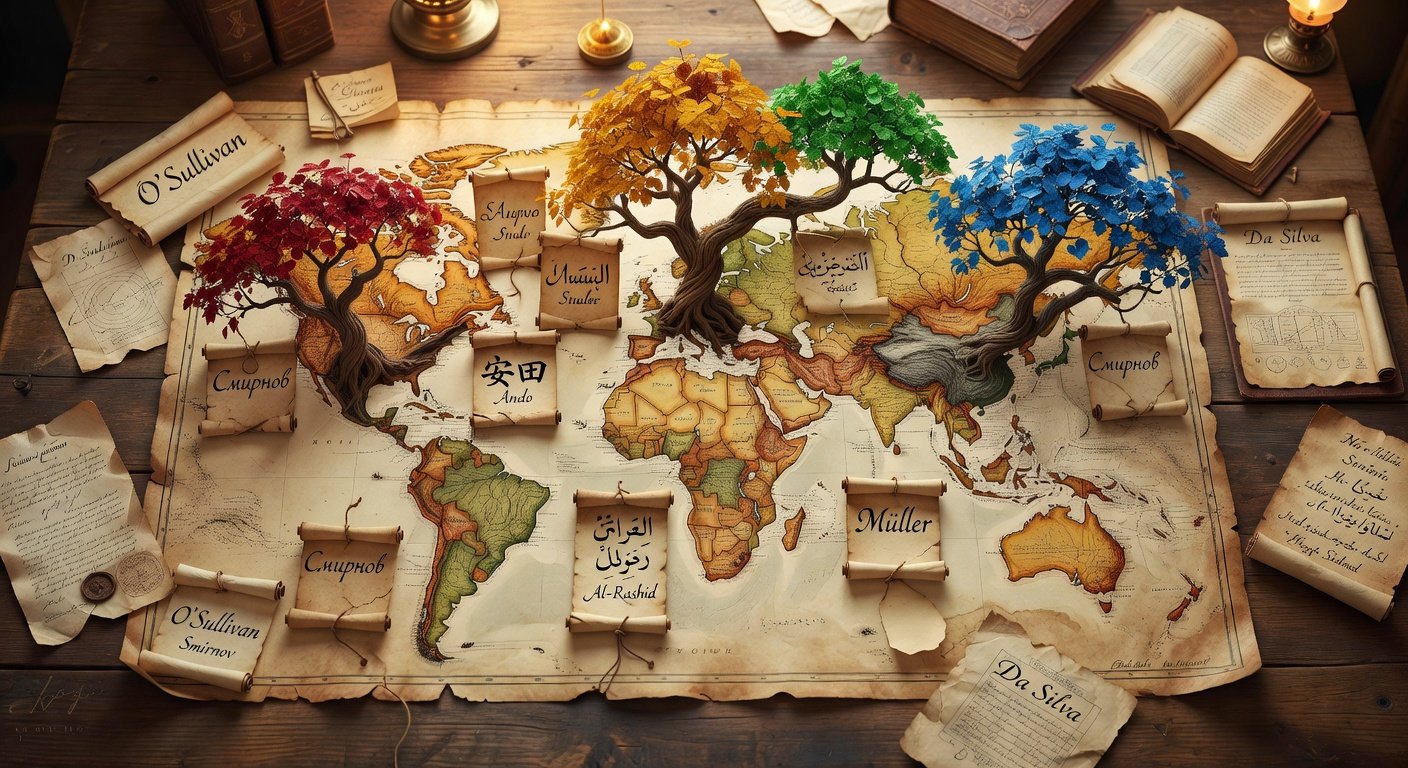
Understanding Global Surname Origin by Country Patterns
Family names developed independently across different cultures, creating fascinating patterns that reflect each region’s unique history, social structure, and linguistic traditions. The study of surname origin by country reveals how geographical isolation, cultural values, and historical events shaped the way people identified themselves and their families. While some cultures adopted surnames as early as the 11th century, others maintained single-name traditions well into the modern era, creating a rich tapestry of naming conventions that genealogists and family historians continue to explore today.
The formation of surnames followed distinct patterns based on four primary categories: patronymic (father’s name), occupational (job or trade), geographical (place of origin), and descriptive (physical characteristics or personality traits). However, the emphasis on each category varied dramatically between countries and cultures. Understanding these regional differences becomes crucial for anyone tracing their ancestry, as it provides context for name changes, variations, and the social significance behind family appellations that have been passed down through generations.
European Surname Origin by Country Traditions
European countries developed some of the earliest systematic approaches to family naming, with each nation creating distinct patterns that reflected their social hierarchies and cultural values. In England, surnames became hereditary among the nobility by the 12th century, gradually spreading to common people by the 14th century. English surnames predominantly derived from occupations (Smith, Baker, Miller), geographical features (Hill, Brook, Wood), or patronymic origins (Johnson, Richardson, Williams). The Norman Conquest of 1066 introduced French naming conventions, creating a blend of Anglo-Saxon and Norman traditions that characterizes English surnames today.
Germanic countries developed complex patronymic systems that often included generational markers and regional variations. German surnames frequently incorporated occupational elements with geographical descriptors, creating compound names that told detailed stories about family origins. The von prefix indicated nobility or land ownership, while names ending in -mann, -berg, or -stein revealed specific regional influences. Scandinavian countries maintained strong patronymic traditions longer than most European nations, with Iceland continuing this practice today, where children take their father’s first name plus -son or -dóttir rather than inheriting fixed family names.
Celtic and Mediterranean Naming Systems
Celtic cultures across Ireland, Scotland, and Wales developed distinctive surname patterns that emphasized clan relationships and territorial connections. Irish surnames commonly began with Ó (grandson of) or Mac (son of), creating patronymic chains that could trace lineages back multiple generations. Scottish Highland clans used similar systems, but also incorporated territorial designations that indicated specific glen or island origins. Welsh naming traditions relied heavily on patronymics using ap (son of) or ferch (daughter of), though many Welsh families later anglicized these forms during periods of English influence, creating hybrid surnames that reflect both Celtic and English linguistic elements.
Asian Surname Origin by Country Development
Asian cultures developed sophisticated surname systems thousands of years before European traditions, with Chinese family names dating back over 4,000 years. Chinese surnames typically preceded given names and often derived from ancient clan names, geographical locations, or imperial grants. The limited number of Chinese surnames (fewer than 500 common ones) reflects the culture’s emphasis on ancestral continuity and family honor. Japanese surnames, conversely, were restricted to nobility until the Meiji Restoration of 1868, when all citizens were required to adopt family names. This led to creative combinations using geographical features, creating surnames like Yamamoto (mountain base) or Tanaka (middle of the rice field).
Korean surnames follow Chinese influences but developed unique characteristics, with approximately 250 family names serving the entire population. The most common Korean surnames (Kim, Lee, Park) account for nearly half of all Korean families, reflecting ancient tribal confederations and royal lineages. Vietnamese naming conventions blend Chinese influences with indigenous traditions, typically placing the family name first, followed by a middle name and given name. The prevalence of certain Vietnamese surnames like Nguyen (accounting for nearly 40% of the population) stems from historical periods when subjects adopted royal family names to show loyalty or avoid persecution.
South Asian and Middle Eastern Patterns
Indian subcontinent naming systems vary dramatically by region, religion, and caste, creating complex patterns that often indicate social status, geographical origin, and family occupation. Hindu naming traditions frequently incorporate caste indicators, village names, or patronymic elements, while Sikh names commonly include Singh (lion) for men and Kaur (princess) for women as middle names rather than hereditary surnames. Muslim names in the region often emphasize religious significance or ancestral connections to Islamic scholars and leaders, creating surnames that reflect spiritual lineages alongside family histories.
African and Indigenous Surname Origin by Country Systems
African naming traditions vary enormously across the continent’s diverse cultures, with many societies traditionally using single names or patronymic systems that changed with each generation. Colonial influences dramatically altered these patterns, often forcing European-style surnames onto indigenous populations or creating hybrid systems that blended traditional and imposed naming conventions. In West Africa, many surnames reflect clan totems, geographical features, or significant historical events, while East African cultures often emphasize ancestral connections and tribal affiliations through complex naming ceremonies that assign names based on birth circumstances and family hopes.
Indigenous American naming systems faced similar colonial disruptions, with many traditional names being replaced or modified by European settlers and government officials. Native American tribes had sophisticated naming traditions that often included multiple names throughout a person’s lifetime, reflecting achievements, spiritual connections, or changing roles within the community. The forced adoption of European surnames during reservation periods created lasting impacts on genealogical research, as many families lost connections to their original naming traditions while adapting to imposed systems that bore little relationship to their cultural heritage.
Modern Surname Evolution and Immigration Patterns
Immigration and globalization have created new patterns in surname origin by country analysis, as families adapt their names to new linguistic and cultural environments. Ellis Island and other immigration centers documented thousands of name changes, some intentional and others resulting from clerical errors or pronunciation difficulties. These modifications often reflected immigrants’ desires to assimilate into their new countries while maintaining connections to their heritage. Understanding these changes becomes essential for genealogical research, as the same family might appear in records under multiple surname variations across different countries and time periods.
Contemporary naming practices continue evolving, with some countries allowing greater flexibility in surname choices while others maintain strict traditional systems. Women’s surname choices after marriage vary significantly by country, with some cultures maintaining maiden names, others requiring husband’s surnames, and many offering multiple options. These modern variations add new layers to surname origin research, requiring genealogists to understand both historical naming patterns and contemporary legal frameworks that govern name changes and inheritance across different jurisdictions.

Frequently Asked Questions
Which countries developed surnames first?
China developed the earliest systematic surname system over 4,000 years ago, followed by other Asian cultures. European countries began adopting hereditary surnames between the 11th and 14th centuries, starting with nobility and gradually spreading to common people.
Why do some countries have very few common surnames?
Limited surname pools often result from historical factors like small founding populations, cultural emphasis on ancestral continuity, or periods when subjects adopted royal names. Korea and Vietnam exemplify this pattern with just a few surnames accounting for large percentages of their populations.
How did immigration affect surname origins?
Immigration frequently led to surname modifications through anglicization, translation, or clerical errors at entry points. Many families intentionally changed names to assimilate, while others experienced involuntary changes due to language barriers or administrative mistakes.
Do all cultures use hereditary surnames?
No, some cultures maintain patronymic systems where names change each generation, and others use single names. Iceland still uses traditional patronymics, while many African and indigenous cultures had different naming traditions before colonial influences.
Ready to Trace Your Surname Origins?
Understanding your family name’s country of origin opens doors to rich genealogical discoveries. Our comprehensive surname research tools help you explore naming patterns, trace geographical origins, and connect with your ancestral heritage. Start your family history journey today and uncover the fascinating stories behind your surname’s unique cultural background.