
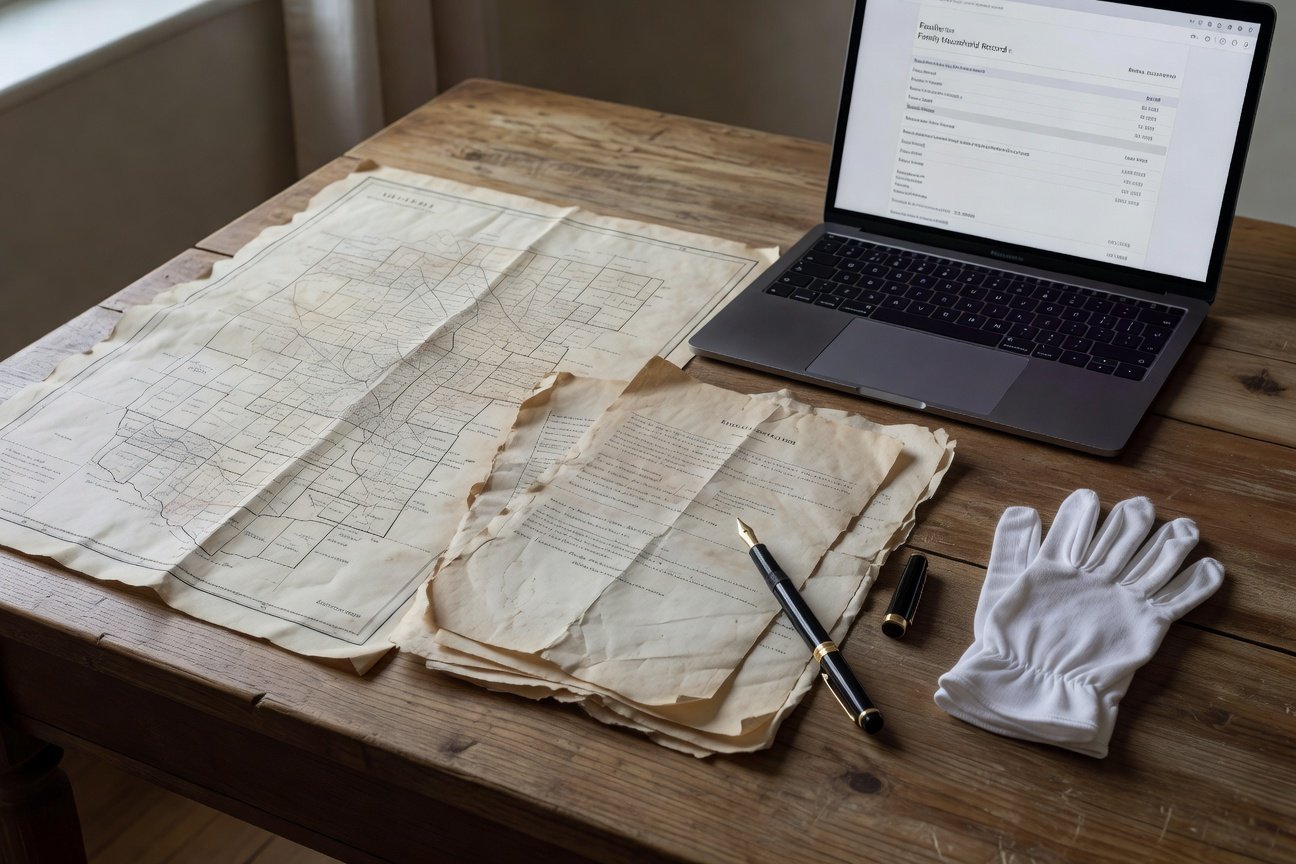
Why Census Records Matter in Genealogy Research
Census records genealogy research relies on one of the most useful record sets available: annual snapshots of households that can place a family in a specific location at a specific time. U.S. federal censuses from 1790 through 1940 can help you confirm relationships, estimate birth years, track migration, and identify neighbors who may be relatives. Because census schedules were created for government counting purposes, they are not perfect, but their consistency makes them a backbone source for building family timelines. For many researchers, the census is the first record that turns a name into a household and a household into a story.
The real value of census records comes from comparison. One census may show a parent in one county, while the next reveals a move across state lines, a new occupation, or children who were not yet born in the earlier record. By pairing census entries with birth, marriage, death, land, and obituary records, you can build a more complete picture of a family across generations. This guide focuses on how to read the records, what each census year can tell you, and where to find them free or at low cost without wasting time on dead ends.
What U.S. Federal Census Records Can Reveal
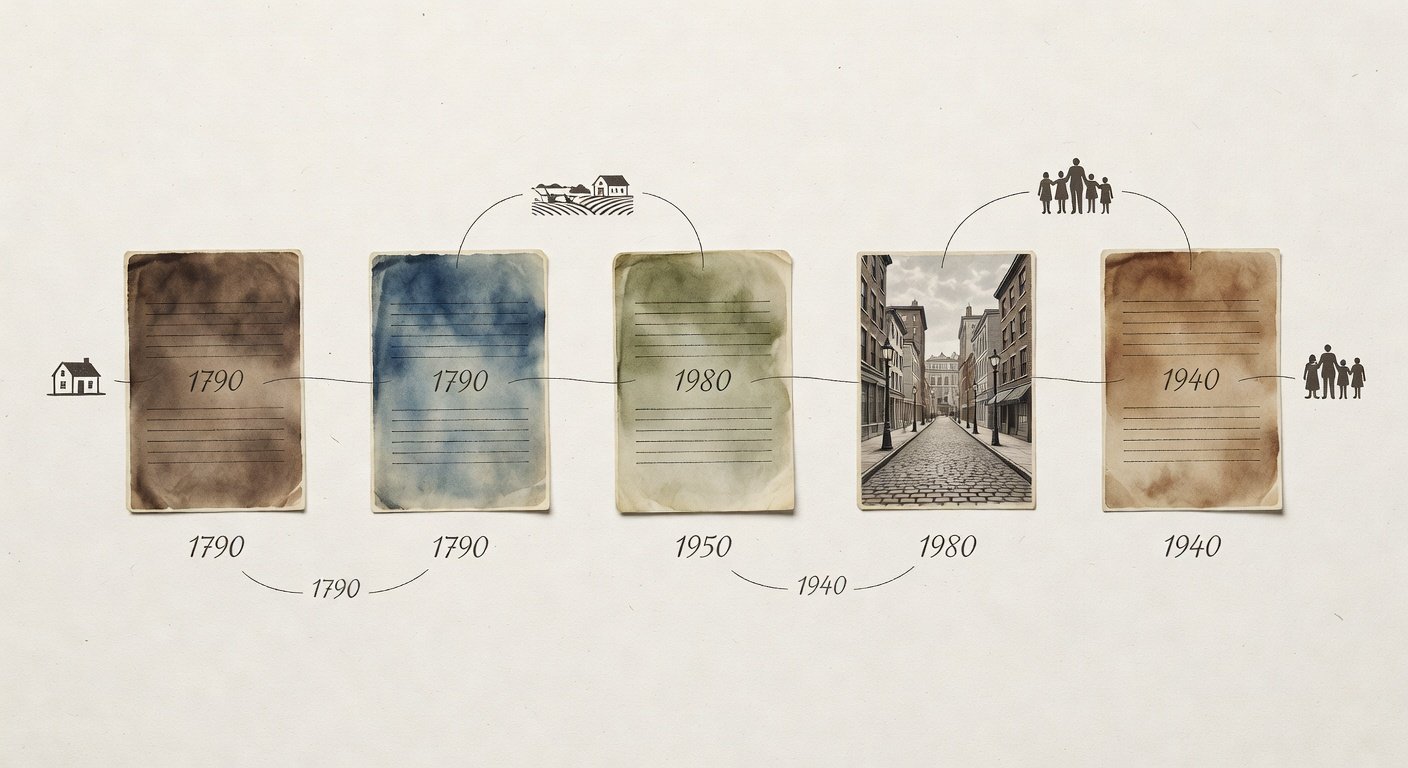
Each U.S. federal census captures slightly different details, and that variation is what makes census records genealogy work so powerful. Early censuses from 1790 to 1840 are mostly headcounts, but they still help place a family in a county and often suggest household size and age ranges. Later censuses become richer, adding names, relationships, occupations, birthplaces, immigration status, literacy, and homeownership. By 1850, most household members are named, which makes that census a major turning point for family history research. By 1940, you may also find residence in 1935, education level, and income clues.
Knowing what changed from one census to the next helps you set realistic expectations. A missing child in one census may simply mean the child was born after the enumeration date, was visiting another household, or was recorded under a nickname or middle name. Ages may shift slightly, birthplaces may be abbreviated, and spellings may vary from one decade to another. These inconsistencies are normal. The key is to treat each census as evidence to be compared with other records rather than as a stand-alone proof of identity.
Census Years at a Glance
The 1790–1840 censuses are best for placing an ancestor in a geographic area and estimating household composition. The 1850, 1860, and 1870 schedules list most household members by name, while the 1880 census adds relationships and more detailed family structure. The 1900 census is especially valuable because it includes month and year of birth, number of children born to a mother, and immigration details. The 1910, 1920, 1930, and 1940 censuses add more clues about employment, naturalization, and movement over time, making them especially useful when you are trying to connect one generation to the next.
A practical approach is to start with the most recent census that could include your ancestor and work backward. This helps you identify children, spouses, and in-laws before records become harder to interpret. If a family disappears between decades, search nearby counties, alternate spellings, and household members who may have moved together. Census records often work best when paired with city directories, vital records, and burial data, because each source can fill gaps left by the others.
How to Read a Census Record Correctly
Reading census records carefully is essential because the handwriting, abbreviations, and column headings can change from year to year. Start by identifying the enumeration date, not just the year, because ages and household composition should be measured against that exact date. Then examine the household in full, including boarders, servants, and extended family members. A child listed with a different surname may be a grandchild, stepchild, or nephew. Occupations, property values, and birthplaces can also separate two men with the same name and help you avoid attaching the wrong family to your tree.
Transcription errors are common in indexed census databases, so always compare the image with the index. A name that appears impossible in a search result may be a misread surname, a nickname, or a badly formed letter in the original image. If the census was handwritten by an enumerator with a heavy script, use neighboring households, ages, and birthplace patterns to confirm identity. For difficult entries, zoom in on the image, review the column headers, and compare the record with other documents from the same time period. This careful reading is often what separates a tentative match from a reliable one.
Common Census Clues Researchers Miss
Some of the most useful clues in a census are not the obvious ones. A family’s neighbors may be relatives from the same town or immigrant community. A child’s middle initial may match a later marriage record. A widow living with adult children can reveal the father’s death window. In agricultural areas, the value of real estate and personal property may help distinguish two men with the same name. In urban records, street addresses can connect a family to city directories, tax lists, and school records. These details often provide the bridge between one generation and the next.
Another overlooked clue is the birthplace pattern across the household. If several children were born in different states, the family likely moved between census years, which can guide your search for land sales, church records, or local newspapers. If an ancestor’s birthplace appears inconsistent, check whether the census taker used shorthand, whether the family gave an approximate answer, or whether the person was a child of immigrants who may have been born abroad but raised in the United States. Small details like these can dramatically improve your research strategy.
Strategies for Finding the Right Family in Census Records
Searching census records genealogy databases works best when you use flexible search habits. Start with exact names, but quickly test alternate spellings, initials, nicknames, and incomplete birth years. If a surname is common, search by household members, spouse names, or a known child. If a family lived near a border, try adjacent counties and states. For immigrants, search under anglicized versions of the surname as well as the original form. Many researchers find that a broad search followed by careful filtering produces better results than relying on one perfect spelling.
Location is often more reliable than name. If you know where a family lived in one decade, search the same county, township, ward, or neighborhood in the next census to follow them forward or backward. Use nearby relatives, witnesses on marriage records, and burial locations to build a cluster of associated names. This method is especially helpful when names were mistranscribed or when a family used a different surname spelling in different records. A strong census search is less about luck and more about combining clues until the right household becomes visible.
Where to Access Census Records Free or Cheaply
You do not need an expensive subscription to begin using census records genealogy resources. FamilySearch offers free access to many census images and indexes, making it one of the best starting points for beginners. The National Archives also provides guidance and access information for federal census materials. Some library systems, historical societies, and state archives offer free in-house access to major genealogy platforms. If you already use a subscription site, check whether your public library provides remote access through an institutional account, which can reduce costs significantly.
For low-cost research, compare what each platform offers before paying for a full subscription. Some sites have stronger search tools, better image quality, or more complete indexes for specific census years. Ancestry and MyHeritage can be useful when you need broad coverage and household hints, while FamilySearch is often excellent for free searching and image review. If you are building a long-term family history project, a short subscription may be worthwhile during a focused research sprint, especially when paired with free records such as obituaries, gravestones, and public records.

Using Census Records with Other Genealogy Sources
Census records become far more powerful when combined with other sources. Birth and death records can confirm ages that vary from one census to another. Marriage records can identify a spouse who appears only by initials in a household listing. Land deeds can explain why a family moved between counties, while obituaries can name surviving children and provide a final residence. City directories are especially useful for filling the gaps between federal census years, and cemetery research can help verify family groups when names repeat across generations.
DNA testing can also support census-based research, especially when you are trying to sort out families with the same surname in the same region. A DNA match will not replace documentary evidence, but it can point you toward the right branch of a family tree. When used together, census records, vital records, and DNA results create a stronger research framework than any single source alone. That combination is particularly valuable for immigrant families, adopted ancestors, and households that changed surnames over time.
Best Practices for Building a Reliable Census Timeline
A reliable census timeline starts with documentation. Record the census year, household members, ages, birthplaces, address, enumeration district if available, and any unusual notes. Then compare each census to the one before and after it. Look for patterns in migration, naming, and family structure. If an ancestor disappears, note the last confirmed appearance and search nearby records for clues. If a child appears suddenly in a later census, check whether the child was born, adopted, or taken in by relatives between enumerations. Timelines reduce confusion and make it easier to spot errors or missing records.
The strongest census research is methodical rather than rushed. Save images, transcriptions, and source citations as you go so you can revisit them later. If a record seems uncertain, label it as tentative until you have supporting evidence. This habit prevents one mistaken match from spreading through your tree. Over time, your census timeline becomes a map of a family’s movements, occupations, and changing household structure. That map is often the foundation for deeper surname research, especially when you want to understand where a family came from and how it spread across regions.
Frequently Asked Questions
What is the best census year for genealogy research?
The best census year depends on your research goal, but the 1900 census is often a favorite because it includes month and year of birth, immigration details, and family structure clues. The 1880, 1910, 1920, 1930, and 1940 censuses are also highly useful because they name most household members and provide richer context than earlier schedules. For many family historians, the best approach is to use several census years together rather than relying on just one.
How do I find a family when the census spelling is wrong?
Try alternate spellings, initials, nicknames, and partial searches by location or household member. Census indexes often contain transcription errors, so the image may show a very different name than the search result. Search nearby counties, use ages and birthplaces as filters, and compare the household with other records such as marriage, obituary, or city directory entries. A flexible search strategy usually works better than one exact spelling.
Are census records free to access online?
Many census records are available free through FamilySearch, the National Archives, libraries, and local historical organizations. Some subscription sites also offer free access through library partnerships or limited previews. If you need broad coverage, compare free options first and then consider a short subscription only if it saves time for a specific project. Free access is often enough to begin a solid census-based family history search.
Why do ages change from one census to the next?
Ages often change because the information was estimated, misheard, or recorded incorrectly by the enumerator. Some families also gave approximate ages, especially if they did not know exact birth dates. Small differences are common and should not automatically disqualify a match. The best way to confirm identity is to compare several clues at once, including birthplace, spouse, children, occupation, and residence.
Ready to Put Census Records to Work?
If you are building a family tree, census records genealogy research is one of the best places to start because it connects names, places, and household relationships across decades. Use the census to build your timeline, then compare it with obituaries, cemetery records, vital records, and surname history resources to strengthen each link. If you want more research help, explore our other genealogy guides and records articles to keep moving from one clue to the next with confidence.