
Why Conduct a Surname Origin Search?
Understanding your surname origin search reveals far more than just a name—it opens a window into your family’s history, migration patterns, and cultural heritage. Many people carry surnames passed down through generations without knowing their true meaning or geographic roots. A surname origin search can connect you to ancestral homelands, occupational histories, and even noble lineages. Whether you’re curious about whether your family name derives from a place, an occupation, or a descriptive characteristic, conducting this research enriches your personal narrative. The process has become increasingly accessible, with genealogy platforms offering comprehensive databases that would have required years of library research just a decade ago.
Beyond personal curiosity, a surname origin search serves practical purposes in genealogy research. Knowing the origin and variants of your surname helps you identify the correct ancestors in historical records, which often contain spelling variations and name changes. This knowledge becomes invaluable when searching immigration records, census data, and vital statistics. Additionally, understanding your surname’s geographic origin narrows your research focus, allowing you to target specific regions and time periods. Many people discover unexpected family connections or learn about historical events that shaped their family name through this investigative process. The investment in a surname origin search often accelerates other genealogical discoveries by providing crucial context and direction.
Best Free Tools for Surname Origin Search
Several exceptional free resources exist for conducting a comprehensive surname origin search without spending money. FamilySearch, operated by The Church of Jesus Christ of Latter-day Saints, offers one of the largest free genealogy databases globally, containing billions of records including census data, vital records, and family trees. Their surname search function allows you to explore your family name across multiple countries and time periods. Forebears represents another powerful free tool specifically designed for surname research, providing distribution maps showing where your surname is most common, variant spellings, and historical frequency data. These platforms combine accessibility with depth, making them ideal starting points for anyone beginning a surname origin search. The data visualization features help you understand your surname’s geographic concentration and evolution over time.
FamilySearch: Comprehensive Free Database
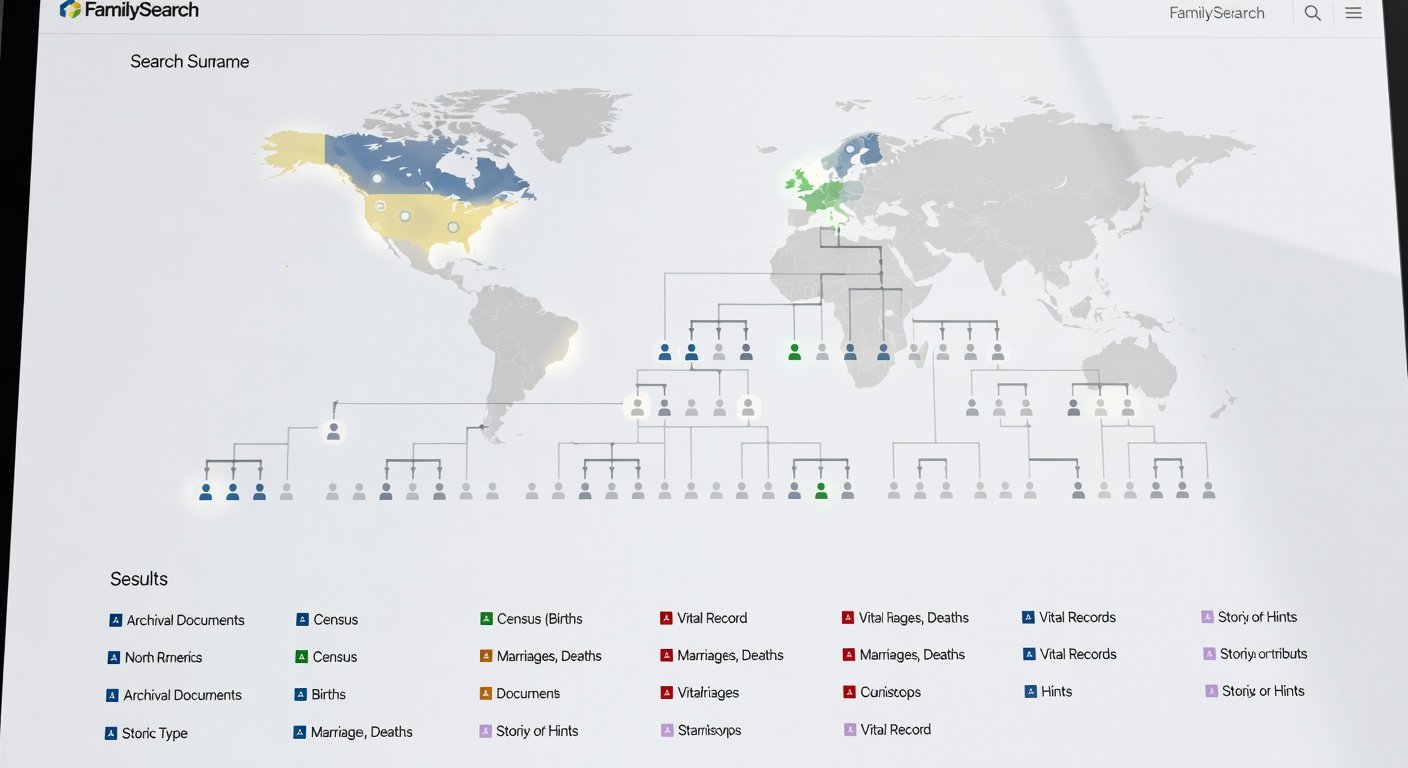
FamilySearch stands as one of the most comprehensive free resources for surname origin search, with over 12 billion indexed records available at no cost. To begin your search, visit FamilySearch.org and create a free account. Navigate to the search function and enter your surname in the name field, leaving other parameters blank initially to cast a wide net. The platform displays results organized by record type—census records, vital records, family trees, and historical documents. Filter results by country and time period to identify your specific family line. FamilySearch’s strength lies in its international coverage; you can trace surnames across multiple countries and continents. The platform also allows you to build your own family tree, which automatically suggests potential matches from other users’ research. Take advantage of the surname statistics feature, which shows you how many records match your surname and in which regions they concentrate. This data proves invaluable for understanding your surname’s geographic distribution and historical prevalence.
Forebears: Surname Distribution and Variants
Forebears specializes in surname research and offers completely free access to its database, making it an excellent choice for surname origin search without financial investment. The platform excels at showing you where your surname is most common globally, with interactive maps displaying surname concentration by country and region. Enter your surname on the Forebears homepage to instantly see distribution data, surname frequency rankings, and variant spellings. The site provides surname statistics showing how many people share your name and in which countries they reside. Forebears also connects you to historical records and allows you to explore surname variants, which proves particularly helpful if your family name has changed spelling over generations. The platform’s simplicity makes it accessible to beginners, while its depth satisfies experienced genealogists. You can explore related surnames, view surname rankings by country, and identify geographic hotspots where your family name originated. This information becomes crucial context for more detailed genealogical research on other platforms.
Premium Paid Tools for Advanced Surname Origin Search
While free tools provide excellent starting points, paid genealogy platforms offer significantly expanded databases, advanced search capabilities, and professional-grade research tools that accelerate surname origin search efforts. Ancestry.com represents the largest genealogy database globally, containing over 20 billion historical records including census data, immigration records, military documents, and digitized newspapers. The platform’s search algorithms help you identify ancestors even with spelling variations or incomplete information. MyHeritage offers competitive pricing and combines genealogy records with DNA testing options, allowing you to verify your surname origin research through genetic data. FamilyTreeDNA specializes in genetic genealogy and surname projects, connecting you with distant relatives who share your surname. These premium platforms justify their cost through comprehensive record access, advanced research tools, and professional support. Many users find that investing in a paid subscription accelerates their research timeline significantly, particularly when pursuing detailed surname origin search across multiple generations.
Ancestry.com: Largest Record Database
Ancestry.com dominates the genealogy market with over 20 billion records and remains the gold standard for comprehensive surname origin search. Begin by creating an account and selecting a subscription plan; the basic subscription provides access to U.S. records, while international plans unlock records from over 180 countries. Use the search function to enter your surname and filter by time period and location to narrow results. Ancestry’s strength lies in its digitized census records, which show surname distribution across decades and reveal migration patterns within your family line. The platform’s record hints feature automatically suggests potential matches from their database, saving you hours of manual searching. Ancestry’s family tree builder integrates seamlessly with their records, allowing you to attach documents directly to ancestors. The newspaper archive contains millions of digitized publications, often providing biographical information and surname context. For serious surname origin search, Ancestry’s combination of records, tools, and user community makes it worth the investment. Many researchers maintain Ancestry subscriptions specifically for the breadth of records available nowhere else.
MyHeritage: Affordable Alternative with DNA Integration
MyHeritage offers a more affordable alternative to Ancestry while providing competitive genealogy records and the unique advantage of integrated DNA testing. The platform contains over 12 billion records across 42 countries, making it a strong choice for international surname origin search. MyHeritage’s subscription plans start lower than Ancestry, making it accessible for budget-conscious researchers. The platform excels at record matching, using artificial intelligence to suggest potential ancestors from their database automatically. MyHeritage’s DNA testing service allows you to verify your surname origin research genetically, connecting you with relatives who share your family name. The platform’s family tree builder includes collaboration features, enabling you to work with distant relatives on shared ancestry research. MyHeritage also offers a surname database that shows distribution maps and variant spellings. For users interested in combining traditional genealogy research with DNA testing, MyHeritage provides excellent value. The platform’s competitive pricing and international record coverage make it particularly attractive for surname origin search outside the United States.
Step-by-Step Surname Origin Search Process
Conducting an effective surname origin search requires a systematic approach that begins with what you know and expands outward. Start by documenting your own generation and working backward, recording names, dates, locations, and any family stories about your surname’s origin. Interview older family members who may possess knowledge about your family name’s history, variant spellings, or ancestral homelands. Next, begin your digital search on free platforms like FamilySearch and Forebears to establish baseline information about your surname’s distribution and variants. Document your findings, noting which surnames appear frequently in which regions and time periods. This initial research phase typically reveals patterns that guide your next steps. Once you’ve gathered baseline information, consider upgrading to paid platforms if your research requires access to specific records. Create a research plan targeting the geographic regions and time periods where your surname concentrates. Keep detailed notes on every search you conduct, documenting search terms, results, and sources. This methodical approach prevents duplicate effort and builds a comprehensive picture of your surname’s origin and evolution.

Gathering Family Information Before Searching
Before initiating your surname origin search, invest time in gathering information from family sources. Contact relatives across different branches of your family and ask about family stories, traditions, or knowledge regarding your surname’s origin. Request any family documents they may possess—old letters, photographs, family bibles, or genealogical charts. Document your immediate family thoroughly, including full names, birth dates, birth locations, marriage dates, and marriage locations. This foundational information becomes invaluable when searching historical records, as it helps you identify the correct ancestors among potentially hundreds of people sharing your surname. Create a simple chart documenting your direct line going back as far as family knowledge extends. Ask specifically about surname variations—did your family name change spelling when they immigrated? Did they use a shortened or anglicized version? Were there nicknames or alternative names? This preliminary work typically takes several hours but saves countless hours of confused searching later. Many genealogists skip this step, leading to research dead-ends and incorrect ancestor identification. Treat this preparation as the foundation for all subsequent surname origin search efforts.
Searching Free Platforms Effectively
Once you’ve gathered family information, begin your surname origin search on free platforms using strategic search techniques. On FamilySearch, enter your surname and leave other fields blank initially, then progressively add filters like country and time period. Review the results systematically, noting which record types appear most frequently and in which regions. Click on individual records to examine them closely—these often contain additional family members and contextual information. On Forebears, study the distribution map carefully; the regions showing highest concentration likely represent your surname’s origin point. Explore variant spellings listed on the site, as historical records often contain spelling variations. Document everything you find, including record types, time periods, and geographic concentrations. Look for patterns—if your surname appears predominantly in Ireland in the 1800s, your family likely originated there. Free platforms often provide sufficient information for basic surname origin research, particularly if your family remained in one geographic region. However, if your research requires detailed records like immigration documents or military service records, you’ll likely need to upgrade to paid platforms. Use free resources to establish your research direction before investing in paid subscriptions.
Understanding Surname Variants and Spelling Changes
Surname variants represent one of the most significant challenges in surname origin search, particularly when researching immigrant families or records spanning multiple centuries. Your surname may appear in historical records under multiple spellings due to illiteracy among record-keepers, phonetic spelling variations, intentional anglicization, or clerical errors. Understanding these variants proves essential for comprehensive research. Many surnames changed spelling when families immigrated, particularly from non-English speaking countries. Irish surnames beginning with ‘O’ or ‘Mc’ sometimes appeared as ‘O” or ‘Mac’ in different records. German surnames often underwent anglicization—Schmidt became Smith, Müller became Miller. Jewish surnames frequently changed when families immigrated to English-speaking countries. Document all variants you encounter during your surname origin search, as they represent the same family line. Forebears and other platforms specifically highlight common variants, making this easier. When searching historical records, use wildcards and partial name searches to capture spelling variations. Understanding that your ancestor’s surname might appear as three different spellings across three different record types prevents you from missing crucial information. This knowledge transforms surname origin search from frustrating dead-ends into productive discoveries.
Using DNA Testing to Verify Surname Origin
DNA testing has revolutionized surname origin search by providing genetic verification of traditional genealogical research. Autosomal DNA tests from companies like Ancestry DNA, MyHeritage DNA, and FamilyTreeDNA connect you with genetic relatives, many of whom share your surname. These connections often provide confirmation of your surname origin research and may reveal previously unknown family branches. DNA testing proves particularly valuable when traditional records are unavailable or when surname origin research hits dead-ends. Y-DNA testing, available through FamilyTreeDNA, traces your paternal line and connects you with distant male relatives who share your surname. This specialized testing helps establish whether different families with your surname descend from a common ancestor or represent unrelated lineages. Many surname projects on FamilyTreeDNA organize testing for people sharing specific surnames, creating comprehensive genetic maps of surname distribution. These projects often publish results showing which regions your surname originated and how different family branches dispersed. DNA testing complements traditional surname origin search by providing biological confirmation of genealogical conclusions. However, DNA testing works best when combined with traditional genealogy research; DNA results alone cannot establish specific ancestor relationships without supporting documentation.
Specialized Tools for Specific Surname Origins
Certain genealogy platforms specialize in specific geographic regions or ethnic surnames, offering advantages for targeted surname origin search. Ellis Island Records provides free access to passenger lists for over 65 million immigrants who arrived at Ellis Island between 1892 and 1924, invaluable for researching surnames of European origin. The Irish Genealogy website offers free access to Irish vital records and census data, essential for Irish surname research. JewishGen specializes in Jewish genealogy and surname research, with databases specifically designed for Jewish family names. FamilySearch maintains specialized collections for numerous countries and ethnic groups, with dedicated surname resources. Cyndi’s List compiles links to thousands of genealogy websites organized by surname, location, and record type. These specialized platforms often contain records unavailable on general genealogy sites, making them crucial for comprehensive surname origin search. If your surname originates from a specific country or ethnic background, researching specialized platforms often yields better results than general genealogy databases. Many of these specialized resources remain free, making them excellent starting points before investing in broader genealogy subscriptions. Combining general platforms with specialized resources creates a comprehensive surname origin search strategy.
Common Challenges and Solutions in Surname Origin Search
Surname origin search frequently encounters obstacles that frustrate researchers, but understanding common challenges helps you develop effective solutions. Name changes represent the most common challenge—ancestors sometimes changed surnames intentionally or had them changed by immigration officials. Solution: research your family’s immigration timeline and look for records showing name variations. Limited record availability creates another significant challenge, particularly for families from regions with poor record preservation. Solution: expand your search to include collateral relatives, as they may have left records your direct ancestors didn’t. Spelling variations cause researchers to miss crucial records, particularly in pre-standardization eras. Solution: use wildcard searches and partial name matching on genealogy platforms. Identical names create confusion when multiple people share your exact surname, making ancestor identification difficult. Solution: use birth dates, locations, and family relationships to distinguish between individuals. Conflicting information across sources frustrates researchers attempting to establish definitive ancestry. Solution: evaluate source reliability and prioritize contemporary records over later recollections. Privacy restrictions limit access to recent records, particularly vital records and census data. Solution: contact local government offices directly or use genealogy platforms with institutional access. Understanding these common challenges and their solutions prevents discouragement and keeps your surname origin search productive. Most challenges have workarounds; persistence and systematic methodology overcome obstacles.
Frequently Asked Questions
What’s the best free tool for surname origin search?
FamilySearch and Forebears are the top free options. FamilySearch offers 12+ billion records across multiple countries, while Forebears specializes in surname distribution maps and variant spellings. Start with both platforms to establish baseline information about your surname’s geographic concentration and common variants before investing in paid tools.
How do I find my surname’s origin if my family changed its name?
Research your family’s immigration timeline and look for naturalization records, ship manifests, and census data showing name variations. Interview older relatives about family stories regarding name changes. Use genealogy platforms’ wildcard search features to find alternate spellings. Once you identify the original surname spelling, search historical records from your family’s country of origin.
Can DNA testing help with surname origin search?
Yes, DNA testing complements traditional genealogy research by connecting you with genetic relatives who share your surname. Y-DNA testing specifically traces paternal lineage and connects distant male relatives. DNA results verify traditional research findings and may reveal previously unknown family branches, but work best when combined with documented genealogical evidence.
Is Ancestry.com worth the cost for surname research?
Ancestry.com’s 20+ billion records justify the cost for serious surname research, particularly if you’re tracing ancestors across multiple countries or time periods. The platform’s digitized census records, newspapers, and immigration documents provide information unavailable elsewhere. Consider starting with free platforms, then upgrading to Ancestry if you need access to specific record types.
How far back can I typically trace my surname?
Most researchers can trace surnames back 3-5 generations using free resources and basic genealogy skills. With paid platforms and advanced research techniques, many trace back 6-10+ generations. The distance depends on your surname’s origin, record availability in your family’s geographic region, and how common your surname is. Unique surnames typically trace further than common ones.
Ready to Discover Your Surname’s Story?
Starting your surname origin search doesn’t require expensive tools or professional genealogists. Begin today with free platforms like FamilySearch and Forebears to understand your family name’s geographic distribution and variants. As your research deepens, consider upgrading to paid platforms like Ancestry or MyHeritage for access to specialized records and advanced search capabilities. Whether you’re driven by curiosity, genealogical passion, or family heritage preservation, the tools and techniques outlined in this guide provide everything you need to trace your surname’s origins and connect with your ancestral past. Your family’s story awaits discovery.