Understanding Scottish Surnames Origins
Scottish surnames carry centuries of history within their syllables, reflecting the complex tapestry of Scotland’s cultural heritage, geographic divisions, and clan systems. Unlike many European naming traditions that developed along purely patronymic or occupational lines, Scottish surnames origins are deeply intertwined with the feudal clan system, particularly in the Highlands, and with Norman-influenced naming patterns in the Lowlands. Understanding where your Scottish surname comes from requires exploring multiple linguistic traditions—Gaelic, Norse, Norman-French, and English—that have shaped Scottish identity across different regions and time periods. The origins of Scottish surnames often reveal not just family lineage but also ancestral geography, social status, and cultural identity. Whether your name begins with ‘Mac’ or ‘Mc,’ derives from a geographic location, or reflects an occupation, each Scottish surname tells a distinct story about your ancestors’ place in Scottish society. This comprehensive exploration of Scottish surnames origins will help you understand the historical forces that shaped your family name and connect you more deeply to your Scottish heritage.
The study of Scottish surnames origins has become increasingly important to genealogy enthusiasts seeking to understand their family histories. With Scotland’s unique clan system and distinct regional naming conventions, tracing a Scottish surname back to its origins often requires knowledge of both historical context and linguistic evolution. Many Scottish surnames underwent spelling variations as they were recorded by English-speaking clerks, Anglicized over generations, or adapted to fit new regions where Scottish families settled. The Highland-Lowland divide created fundamentally different naming traditions, with Highland surnames typically reflecting Gaelic roots and clan affiliations, while Lowland surnames often showed Norman or English influences. DNA testing services like Ancestry, MyHeritage, and FamilyTreeDNA have revolutionized Scottish genealogy by allowing people to connect their surnames to specific regions and clan groups. Understanding Scottish surnames origins provides a foundation for deeper genealogical research, helping you identify where your ancestors likely lived, what their social status may have been, and which historical events shaped your family’s journey.
The Highland Clan System and Mac/Mc Surnames
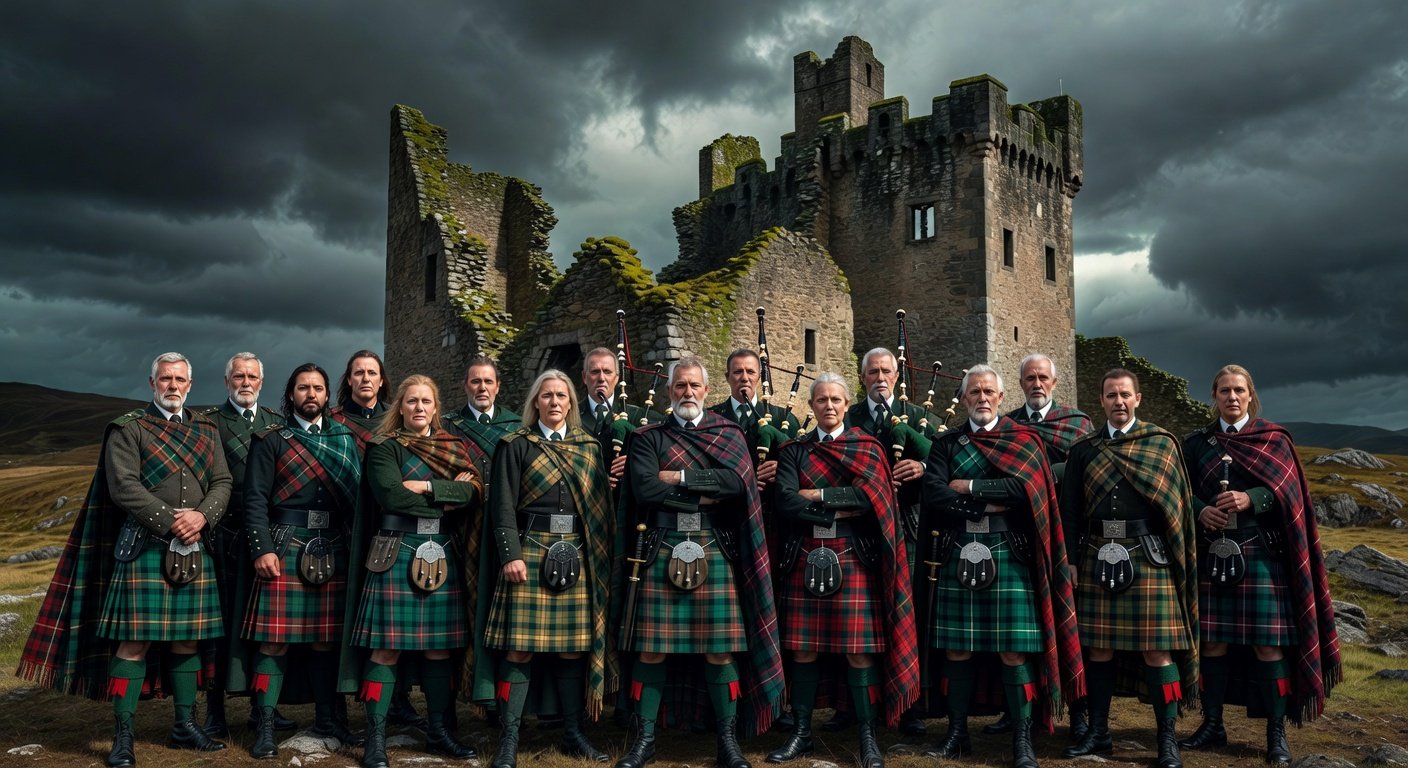
The Highland clan system represents one of the most distinctive features of Scottish culture, and it fundamentally shaped how surnames developed in the northern regions of Scotland. The prefix ‘Mac’ or ‘Mc’—derived from the Gaelic ‘mac’ meaning ‘son of’—became the defining characteristic of Highland Scottish surnames origins. These patronymic surnames indicated descent from a specific ancestor and, more importantly, membership within a particular clan structure that governed social, military, and economic life in the Highlands. A person bearing the surname MacLeod, for example, belonged to the Clan MacLeod and could trace their lineage back to Leod, the legendary ancestor of the clan. The clan system created powerful kinship networks where individuals with the same surname shared not just bloodlines but also land, loyalty, and collective identity. Each major Highland clan occupied specific territories, and surnames became markers of geographic origin as well as family connection. The Mac surnames typically originated between the 11th and 15th centuries as the clan system solidified, though some clans trace their origins even further back to Norse or Celtic ancestors.
Understanding the Highland clan system is essential to appreciating Scottish surnames origins because it explains why so many Scottish people share surnames and why genealogical research often focuses on clan territories and clan records. Major Highland clans like MacLeod, MacDonald, MacKenzie, and Campbell controlled vast estates and maintained detailed records of their members, making them valuable resources for genealogy researchers. The clan system also created a feudal hierarchy where lesser branches of a clan might adopt the chief’s name, creating complex family trees that reflect both biological descent and social allegiance. When researching Scottish surnames origins in Highland regions, genealogists often consult clan histories, which provide context about when families settled in particular areas and how they rose or fell in prominence. The clan system began to decline following the failed Jacobite Rising of 1746, after which the British government actively worked to suppress Highland culture and clan structures. This historical turning point marked a shift in how Scottish surnames were used and recorded, with many families gradually adopting more standardized spellings and losing some of the clan-specific cultural significance their names once carried.
Lowland Scottish Surnames and Norman Influence
While Highland surnames were shaped primarily by the Gaelic clan system, Lowland Scottish surnames origins reflect a distinctly different historical trajectory influenced by Norman-French nobility, English feudalism, and Anglo-Saxon traditions. The Lowlands, encompassing the southern and eastern regions of Scotland, experienced greater contact with England and continental Europe, resulting in surnames that often derived from Norman family names, place names, or occupations. Many prominent Lowland surnames like Douglas, Stewart, and Bruce trace their origins to Norman nobles who received land grants from Scottish kings and established themselves as powerful feudal lords. These surnames typically lacked the ‘Mac’ prefix and instead used patterns more familiar to English and French naming conventions. Geographic surnames became particularly common in the Lowlands, where families often took their names from the lands they controlled or inhabited—names like Lothian, Maitland, and Dalrymple reflect this pattern. Understanding Scottish surnames origins in the Lowlands requires recognizing that these regions developed more along English feudal lines than Highland clan lines, creating a different social structure that produced different naming patterns.
The distinction between Highland and Lowland Scottish surnames origins reflects a broader cultural and political divide that shaped Scottish history for centuries. Lowland surnames often underwent earlier standardization and Anglicization because these regions had closer ties to England and its administrative systems. Many Lowland Scottish surnames became established during the medieval period when Scotland’s kings actively encouraged Norman settlement and adopted feudal governance structures. This Norman influence brought surnames like Fraser, Murray, and Sinclair to Scotland, where they became integrated into Scottish identity while retaining their continental origins. The Lowlands also produced surnames based on occupations—Smith, Miller, Cooper—that followed patterns common throughout medieval Europe. As Scotland gradually unified under royal authority, Lowland surnames often became associated with specific towns, burghs, or estates, creating a geographic specificity that differs from the broader clan-based organization of Highland surnames. Researching Lowland Scottish surnames origins often involves examining land records, burgess rolls, and feudal charters that document how families acquired and held property, providing genealogical trails that complement surname etymology.
Gaelic Roots and Linguistic Evolution of Scottish Surnames
The Gaelic language profoundly shaped Scottish surnames origins, particularly in the Highlands and Islands where Gaelic remained the dominant language well into the modern era. Many Scottish surnames derive directly from Gaelic personal names, place names, or descriptive terms that were Anglicized as English became the official language of Scotland and record-keeping became standardized. Understanding the Gaelic roots of your Scottish surname often requires recognizing how the name was transformed through phonetic spelling, abbreviation, or translation by English-speaking clerks and administrators. For example, the surname Macduff derives from the Gaelic ‘Mac Dhubh,’ meaning ‘son of the dark one,’ while MacLeod comes from ‘Mac Leòid,’ indicating descent from a Norse-influenced ancestor named Leod. The process of Anglicization created numerous spelling variations—MacDonald might appear as McDonald, Macdonald, or M’Donald in historical records—making it challenging but not impossible to trace Scottish surnames origins through genealogical documents. Gaelic surnames often contained descriptive elements that provided information about an ancestor’s appearance, characteristics, or status, making the names themselves a form of historical documentation. The linguistic evolution of Scottish surnames reflects the broader historical process through which Gaelic culture was gradually suppressed in favor of English, a transformation that occurred at different rates in different regions.
Researching the Gaelic roots of Scottish surnames origins provides valuable insight into your ancestors’ cultural identity and geographic origins. Many Scottish surnames that appear distinctly Scottish to modern ears actually preserve ancient Gaelic elements that connect them to pre-medieval Celtic civilization. Surnames beginning with ‘Bal-‘ or ‘Bal’ often derive from the Gaelic ‘baile,’ meaning ‘settlement’ or ‘homestead,’ indicating that your ancestors lived in or were named after a specific place. Similarly, surnames containing ‘Kil-‘ preserve the Gaelic ‘cill,’ meaning ‘church,’ suggesting connections to early Christian communities in Scotland. The process of understanding Gaelic roots requires consulting specialized resources like Gaelic dictionaries, clan histories, and academic studies of Scottish onomastics. DNA testing services increasingly provide information about regional origins within Scotland, helping genealogy researchers connect their surnames to specific Gaelic-speaking regions where their ancestors likely lived. The preservation of Gaelic elements within Anglicized Scottish surnames demonstrates how language change and cultural adaptation shaped family identity over centuries. For those researching Scottish surnames origins, recognizing Gaelic linguistic patterns can provide crucial clues about ancestral geography and cultural heritage that might not be apparent from examining surnames in their modern English forms alone.
Common Gaelic Elements in Scottish Surnames
Scottish surnames often contain recognizable Gaelic elements that, once understood, reveal information about your ancestors’ characteristics, occupations, or geographic origins. The prefix ‘Mac’ or ‘Mc’ remains the most obvious Gaelic element, but numerous other components appear throughout Scottish surnames with consistent meanings. The element ‘Bal’ or ‘Baile’ appears in surnames like Ballantyne and Baliol, indicating settlement or homestead origins. ‘Kil’ or ‘Cill’ in surnames like Kilpatrick and Kilgour preserves the Gaelic word for church, suggesting your ancestors lived near or were associated with early Christian religious sites. ‘Dun’ or ‘Dùn,’ meaning fort or fortified place, appears in surnames like Dunbar and Dundee, indicating geographic origins in fortified locations. ‘Glen’ or ‘Gleann,’ meaning valley, appears in surnames like Glencoe and Glenn, reflecting Highland geography. ‘Inch’ or ‘Innis,’ meaning island or meadow, appears in surnames like Inchbald. ‘Strath’ or ‘Srath,’ meaning wide valley, appears in surnames like Strathmore. Understanding these Gaelic elements transforms Scottish surnames from seemingly arbitrary combinations of letters into meaningful historical documents that reveal ancestral geography and cultural context. When researching your Scottish surnames origins, identifying these Gaelic components provides a starting point for understanding where your ancestors lived and what their environment was like.
Geographic and Occupational Scottish Surnames
Beyond the clan-based and Gaelic-derived surnames that dominate Highland tradition, Scottish surnames origins also include numerous geographic and occupational names that developed across both Highlands and Lowlands. Geographic surnames derive from place names and typically indicate where a family originated or held land, providing genealogists with valuable clues about ancestral territory. Surnames like Sutherland, Caithness, and Argyll derive directly from Scottish regions, while others like Duncansby and Thurso reference smaller geographic features. These geographic surnames often predate the standardization of surnames and represent some of the oldest family names in Scottish history. Occupational surnames in Scotland followed patterns similar to those found throughout medieval Europe, with names like Smith, Miller, Cooper, and Fletcher indicating the trades practiced by ancestors. However, Scottish occupational surnames sometimes retained Gaelic or Norse elements that distinguished them from their English equivalents—for example, the surname Baxter (baker) appears in both Scottish and English contexts but may have different origins depending on regional context. Understanding whether your Scottish surname is geographic or occupational requires consulting historical records, clan histories, and specialized surname dictionaries that document the etymology and earliest recorded instances of specific names.
Geographic and occupational Scottish surnames origins reveal important information about your ancestors’ social status, economic activities, and geographic locations during the medieval and early modern periods. A family bearing the surname Miller likely had ancestors who operated grain mills, which were valuable assets often controlled by feudal lords or wealthy merchants. A surname like Sutherland indicates origins in the far north of Scotland, while a surname like Lothian suggests connections to the southeastern Lowlands. These geographic surnames often became hereditary as families established themselves in particular locations and passed their territorial names to subsequent generations. Occupational surnames sometimes indicate that an ancestor held a specific craft or trade that was important enough to become a family identifier, suggesting a certain level of economic importance or social status. When researching Scottish surnames origins, identifying whether your name is geographic or occupational provides context for understanding what your ancestors did and where they lived. This information becomes particularly valuable when combined with genealogical records like land deeds, guild records, and tax rolls that document how specific families with these surnames accumulated and held property. Geographic and occupational surnames, while less dramatic than clan-based names, often provide more concrete genealogical trails because they connect directly to specific locations and activities that appear in historical documentation.
Spelling Variations and Anglicization of Scottish Surnames
One of the most challenging aspects of researching Scottish surnames origins is navigating the numerous spelling variations that appear throughout historical records. Scottish surnames underwent dramatic transformations as English became the official language of Scotland, as record-keeping became standardized, and as families migrated to English-speaking regions or emigrated to English-speaking countries. The surname MacDonald, for example, appears in historical records as MacDonald, Macdonald, McDonald, M’Donald, and Mc Donald, with each variation potentially appearing in different documents relating to the same family. These variations weren’t random but reflected systematic processes of Anglicization where Gaelic names were phonetically spelled by English-speaking clerks, abbreviated for convenience, or deliberately altered to appear more English. The ‘Mc’ abbreviation for ‘Mac’ became increasingly common during the 18th and 19th centuries as record-keepers sought to standardize Scottish names. Understanding these spelling variations is essential for genealogical research because a family might appear under multiple surname spellings in different records, making it easy to lose track of ancestral lines. Many genealogy researchers using services like Ancestry and MyHeritage encounter this challenge when searching for ancestors—a single family might appear as MacLeod, Mcleod, and M’Leod in different census records, land deeds, or church documents.
The process of Anglicization affected Scottish surnames origins in ways that extended beyond simple spelling changes. Some surnames were translated directly into English equivalents—the Gaelic ‘MacGille-Bhride’ became ‘Kilbride,’ for example. Other surnames were shortened or modified to fit English phonetic patterns, sometimes losing elements that carried meaning in Gaelic. Surnames with Gaelic prefixes or suffixes sometimes had those elements removed entirely, creating confusion about the original meaning and origin of the name. The standardization of Scottish surnames accelerated following the 1746 defeat of the Jacobite Rising, when the British government actively suppressed Highland culture and required standardized record-keeping. This historical moment marked a turning point in how Scottish surnames were documented and preserved. For genealogy researchers, understanding the historical context of Anglicization helps explain why ancestors might appear under different names in records separated by only a few years. When researching Scottish surnames origins, creating a comprehensive list of all spelling variations associated with your surname significantly improves research success. DNA testing services like FamilyTreeDNA often help identify spelling variations by connecting people with similar DNA who use different surname spellings, providing confirmation that variations represent the same family line. Consulting historical records from Scotland—particularly Old Parish Registers and land documents—often reveals the original Gaelic forms of surnames before Anglicization occurred, providing deeper understanding of your family’s cultural heritage.
Notable Scottish Surnames and Their Historical Significance
Certain Scottish surnames have achieved historical prominence through their association with powerful clans, significant historical figures, or important events in Scottish history. The Campbell clan, one of Scotland’s largest and most powerful, produced numerous historical figures and controlled vast territories throughout the Highlands and Lowlands. The Douglas family rose to prominence in the Lowlands and played crucial roles in Scottish politics and warfare, with several family members serving as regents and military leaders. The Stewart family, which eventually produced the Stuart kings of Scotland and England, originated in Lowland Scotland and represents one of the most historically significant Scottish surnames. The MacLeod clan of the Isle of Skye maintained their territories and cultural traditions through centuries of change, preserving Gaelic language and customs longer than many other Highland clans. The Fraser family, with Norman origins that became thoroughly integrated into Scottish identity, produced military leaders, scholars, and landholders throughout Scottish history. Understanding the historical significance of major Scottish surnames origins provides context for appreciating how your own surname might connect to broader patterns of Scottish history. Even if your surname doesn’t belong to one of the most prominent clans, understanding how major Scottish surnames developed helps illuminate the historical forces that shaped all Scottish family names.
Researching notable Scottish surnames origins often reveals fascinating historical details about how specific families navigated Scotland’s turbulent history, including civil conflicts, religious upheaval, and political transformation. The MacGregor clan, for example, was temporarily proscribed—officially banned—by the Scottish government, forcing clan members to adopt alternative surnames or operate in secrecy. The Macdonald clan split into numerous branches following internal conflicts, creating complex genealogical relationships that genealogy researchers must carefully navigate. The Sinclair family, with both Norse and Norman origins, developed distinct branches in different regions of Scotland, each with somewhat different historical trajectories. Many Scottish surnames became associated with specific professions or social roles—the name Maclachlan, for example, derives from the Gaelic for ‘son of the lachlan’ (warrior), reflecting military traditions within the clan. The historical significance of Scottish surnames extends beyond individual clans to include how surnames reflected broader patterns of Scottish society, including the gradual shift from Gaelic to English language dominance, the evolution of feudal structures, and the integration of Scotland into the British political system. For genealogy enthusiasts, researching the historical context of specific Scottish surnames origins enriches understanding of ancestral experiences and connects personal family history to larger historical narratives. Consulting resources like clan histories, academic studies of Scottish surnames, and historical records from the National Records of Scotland provides valuable context that transforms surname research from simple name-tracing into genuine historical investigation.
Using DNA Testing and Genealogy Resources to Trace Scottish Surnames Origins
Modern DNA testing and genealogy databases have revolutionized how researchers trace Scottish surnames origins, providing tools that combine genetic evidence with historical documentation to create comprehensive family histories. Services like Ancestry, MyHeritage, and FamilyTreeDNA allow users to test their DNA and compare results with millions of other users, potentially identifying distant cousins who share Scottish ancestry. These DNA matches often provide crucial connections that help verify Scottish surnames origins and identify previously unknown family relationships. Ancestry’s extensive database includes millions of historical records specific to Scotland, including Old Parish Registers (birth, marriage, and death records), census records, land documents, and emigration records that document how Scottish families migrated throughout the world. MyHeritage offers similar resources with particular strength in European genealogy, making it valuable for tracing ancestors who remained in Scotland or migrated to continental Europe. FamilyTreeDNA specializes in DNA testing and includes specific haplogroup information that can reveal the ancient origins of your maternal and paternal lines, sometimes tracing ancestry back thousands of years before surnames even existed. When researching Scottish surnames origins, combining DNA evidence with genealogical records creates a powerful research methodology that confirms family relationships and reveals geographic patterns of ancestral settlement.
Genealogy researchers tracing Scottish surnames origins should approach DNA testing and database research as complementary strategies rather than replacements for traditional genealogical methods. DNA testing provides confirmation that specific individuals are indeed related and can sometimes reveal unexpected ancestral origins or previously unknown family branches. However, DNA testing alone cannot definitively establish the origins of a surname or explain the historical forces that shaped your family name. Historical records—particularly Scottish documents like Old Parish Registers, sasines (land records), and kirk session records—provide the documentary evidence necessary to trace specific ancestors and understand their lives. When researching Scottish surnames origins, creating a comprehensive family tree using genealogy databases helps organize information and identify gaps in knowledge that DNA testing or further record research might fill. The process typically begins with known living relatives and works backward through parents, grandparents, and earlier ancestors, documenting each connection with specific records. For Scottish research specifically, the National Records of Scotland maintains extensive collections of historical documents available through their online portal, while FamilySearch offers free access to millions of Scottish records including Old Parish Registers. The combination of DNA testing results, genealogy database research, and direct consultation of historical records creates the most comprehensive approach to understanding Scottish surnames origins and tracing your family history back through generations of Scottish ancestors.

Frequently Asked Questions
What does the ‘Mac’ or ‘Mc’ prefix in Scottish surnames mean?
‘Mac’ and ‘Mc’ both derive from the Gaelic ‘mac,’ meaning ‘son of.’ These prefixes indicate patronymic descent and typically denote membership in a Highland clan. The abbreviation ‘Mc’ became increasingly common during the 18th and 19th centuries as record-keeping standardized, but both forms refer to the same Gaelic origin and are used interchangeably in modern Scottish surnames.
How do I find the origins of my Scottish surname?
Start by consulting specialized surname dictionaries and clan histories that document Scottish names. Use genealogy databases like Ancestry or MyHeritage to search historical Scottish records. DNA testing services can confirm regional origins within Scotland. Examine your surname for Gaelic elements like ‘Mac,’ ‘Bal,’ or ‘Kil’ that indicate linguistic roots. Consulting the National Records of Scotland provides access to original documents that may reveal your surname’s earliest recorded instances.
What’s the difference between Highland and Lowland Scottish surnames?
Highland surnames typically use the ‘Mac’ prefix and derive from the Gaelic clan system, reflecting patronymic and clan-based organization. Lowland surnames often show Norman-French or English influences, derive from geographic locations or occupations, and typically lack the ‘Mac’ prefix. These differences reflect distinct historical developments—Highlands maintained clan structures longer, while Lowlands adopted feudal systems earlier.
Why do Scottish surnames have so many spelling variations?
Spelling variations resulted from Anglicization as English became Scotland’s official language and record-keeping standardized. English-speaking clerks phonetically spelled Gaelic names, abbreviated them for convenience, or deliberately altered them to appear more English. A single family might appear as MacDonald, Macdonald, McDonald, or M’Donald in different historical records, making genealogical research challenging but manageable with awareness of these variations.
Can DNA testing help me trace my Scottish surname origins?
Yes, DNA testing through services like Ancestry, MyHeritage, or FamilyTreeDNA can confirm regional origins within Scotland and identify distant cousins who share your Scottish ancestry. DNA results work best when combined with genealogical research using historical records. DNA testing reveals ancient ancestral origins and helps verify family relationships, while historical documents provide specific information about individual ancestors and the development of your surname.
Ready to Explore Your Scottish Heritage?
Understanding your Scottish surname origins is just the beginning of discovering your family’s unique story. Whether you’re starting genealogical research for the first time or deepening existing family history knowledge, DNA testing combined with historical record research provides powerful tools for uncovering ancestral connections. Consider taking a DNA test through Ancestry, MyHeritage, or FamilyTreeDNA to confirm your Scottish regional origins and connect with distant relatives who share your family name. Explore the extensive Scottish historical records available through these platforms and the National Records of Scotland to document your ancestral line. Your Scottish surname carries centuries of history—clan traditions, geographic origins, linguistic heritage—waiting to be discovered and understood.